



From dread to detection
A new HPV self‑collection test is helping people take more control over their cervical cancer screening. Learn how this approach is reducing barriers and empowering clients.
This year, more than 13,000 cervical cancer cases will be diagnosed in the US.* Nearly all of them are preventable through vaccination and screening. But for people experiencing homelessness, prevention often comes last.
When you’re focused on where to sleep or how to find your next meal, scheduling—and returning for—a screening appointment may feel out of reach.
In a recent survey, Health Care for the Homeless clients told us that a lack of transportation and childcare made it especially hard to complete Pap smears. Others said they are reluctant to get screened when they don’t know their provider very well. Still, all agreed that regular screening is the best way to catch cervical cancer early, when it is easier to treat.
A new option is helping remove some of these barriers: HPV (human papillomavirus) self-collection testing.
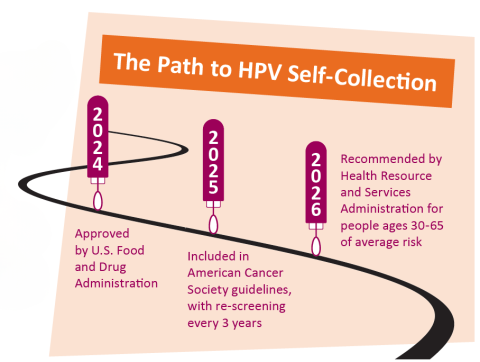
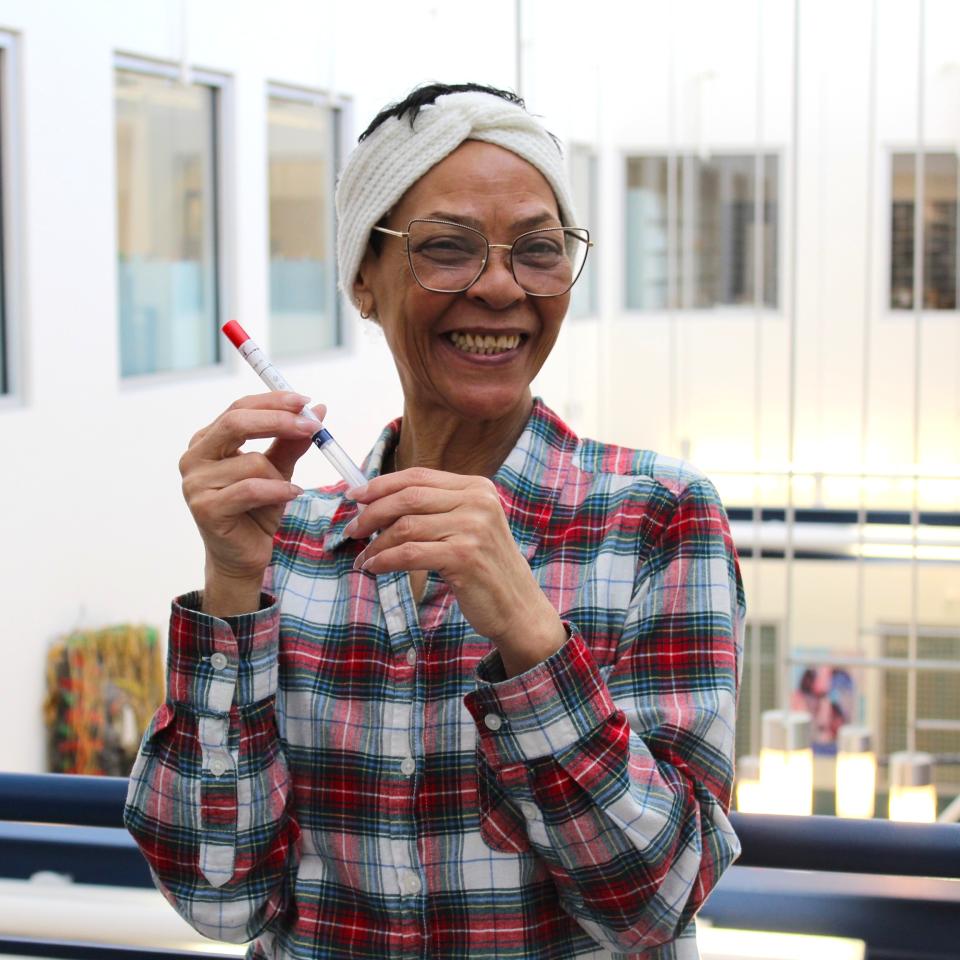
Compared to a Pap smear, the self-collection test is a “barrier breaker,” says MAT Registered Nurse Erin Levitt. To complete it, a person inserts a soft cotton swab into their vagina, swirls the swab for a few seconds and then places it into a test tube. The sample is tested for 14 high-risk HPV strains that can cause cancer. While self-collection isn’t right for everyone, such as people who are HIV positive or previously received an abnormal Pap smear result, it offers clients greater control in how they complete their screening.
“I wish they had come out with this years ago,” says Kyra Gilliam, age 65.
Kyra recently completed her cervical cancer screening with an HPV self-collection swab instead of a Pap smear. “It took less time, and it didn’t hurt,” she says. Kyra, who sees Lead MAT Provider Dr. Adrienne Trustman for primary care, has congestive heart failure and dreaded Pap smears. Laying on the table, waiting for the doctor to insert the speculum was stressful. “I’d tense up and my heart would race.”
When Adrienne offered self-collection as an alternative, Kyra was on board. “I felt very confident using the swab,” she says. “You push up to the red line, go around in circles—I’d much rather do it myself.”
Kyra’s experience reflects what providers are hearing. “I've had a few patients in primary care who kept saying, ‘next visit, next visit,’” says Adrienne. “People want to get screened. They just don't want to have a speculum exam.”
Beyond client comfort, self-collection also solves other clinic constraints. "If it's a busy morning in the MAT clinic and I'm going to see eight people, there might not be time for a Pap," says Adrienne. Plus, a Pap smear requires privacy. "It's hard to have the right space.”
Beyond limited use in primary care, Health Care for the Homeless is piloting the self-collection test in our mobile and MAT clinics—serving clients who face some of the greatest barriers to traditional screening. This effort supports our 2026 goal of increasing cervical cancer screening rates among clients to 60 percent.
Erin will study the agency’s use of the self-collection HPV test, as she completes her doctorate in Nursing Practice at the University of Maryland, Baltimore. “This can save lives,” she says.
Kyra’s message to anyone due for a cervical cancer screening? “It is better to know what stage you’re in than to wait until it is too late. I’d rather know than not know.”
*Source: American Cancer Society
More Recent News
Earlier this year, the Health Resources and Services Administration and the Bureau of Primary Health Care rolled out 2026 Community Health Quality Recognition Badges. Health Care for the Homeless received four badges
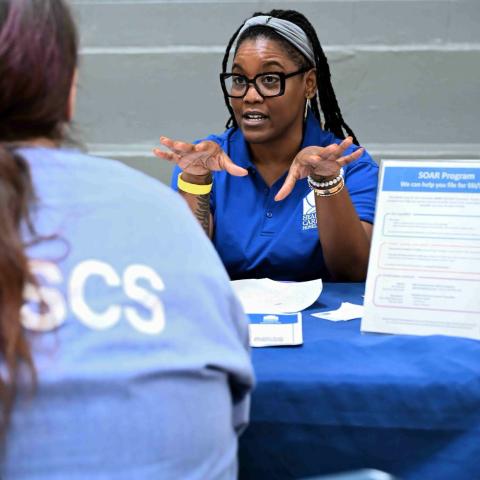
Preparing for reentry starts before release. Discover how Health Care for the Homeless staff are connecting with people behind prison walls, offering support and linking them to resources that can help make the transition home a little easier.

Major changes to Medicaid are coming, and Maryland estimates 175,000 people could lose their health coverage. For people experiencing homelessness, navigating new requirements and maintaining coverage can be especially hard. We talked with Nia Ballard of HealthCare Access Maryland (HCAM) about what’s changing, what she’s hearing from people across Maryland and why keeping people connected to health care matters.
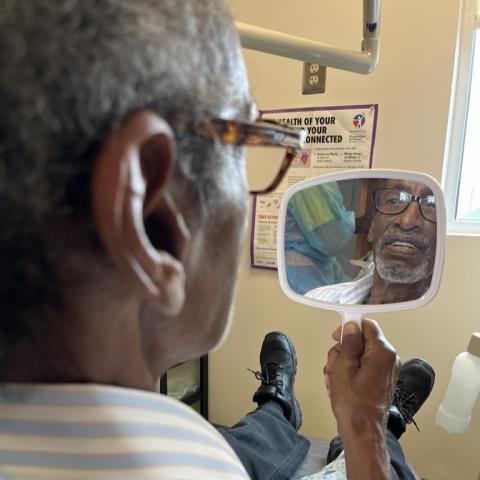
Spend the day with our Fallsway Dental Team and get a behind-the-scenes look at a busy day of cleanings, fillings, dentures and everything in between. Meet the dedicated staff helping clients access the treatment they need while building lasting relationships and healthier smiles.