


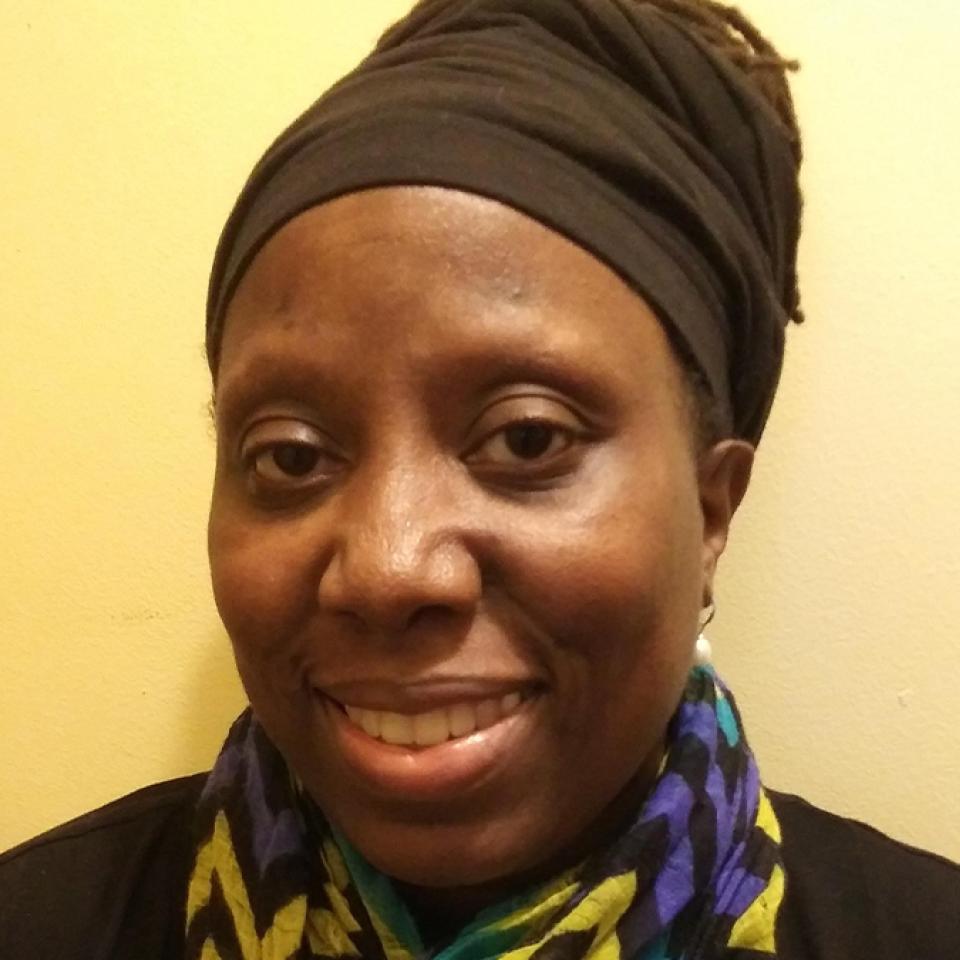
Addressing Racism in Housing
A conversation with Chief Behavioral Health Officer Lawanda Williams
Q: What does everyday housing discrimination sound like?
It can be very subtle. A landlord will ask me what Health Care for the Homeless will do to make sure this person would be a "good tenant." When that happens I ask if that’s a question for all tenants or just ones with subsidized vouchers. There is no relation between personal economics and character, but those often get conflated.
Q: What impact does discrimination have at the community level?
It leads to concentrated poverty in neighborhoods with less investment and fewer opportunities. Food access is a good example. Like Ryan (on page 4), people who live in poorer areas are just as interested in getting quality food as those in wealthy communities, but they live in food deserts and have to travel long distances to access nutritious options. Housing shouldn’t be just a place to survive, it should be somewhere you can thrive.
Q: How can readers fight housing discrimination?
Start with yourself. If you are a person with privilege, recognize your role. Think about your housing and how your experience differs from others. Don’t accept that people with less privilege need to prove they deserve housing. When you hear stigmatizing language, correct it. When we ask others to cope with racism, we are accepting it. Call your legislators and vote to reverse the policies that force our neighbors to be "resilient" to injustices they should never face in the first place.
More Recent News
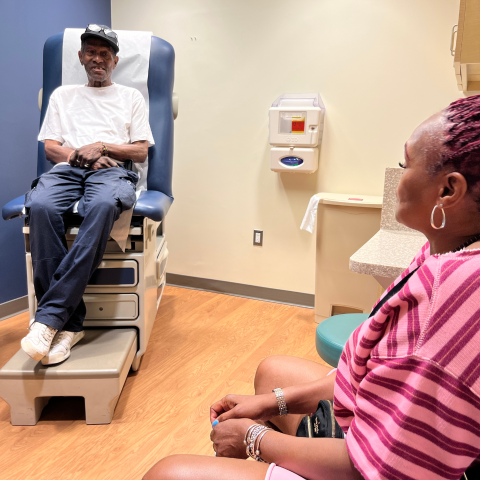
Spend a day with Patient Navigator Kim Taylor and see how hands-on support helps people experiencing homelessness navigate cancer screenings, treatment and a complex health care system. From coordinating referrals to sitting beside clients during appointments, Kim ensures no one faces a cancer diagnosis alone.
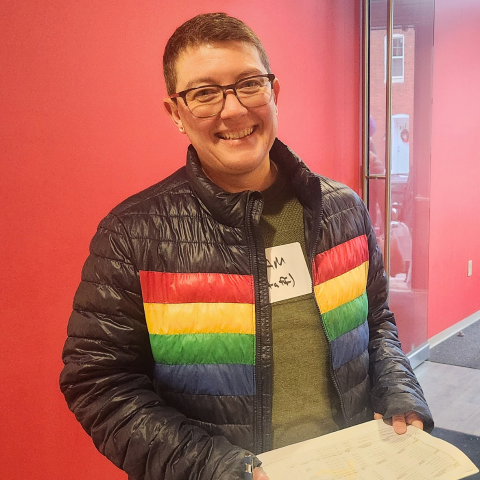
From their headquarters in East Baltimore, Moveable Feast designs and delivers thousands of healthy meals each week for people in Central Maryland and on the Eastern Shore (including some Health Care for the Homeless clients). Read about their approach to improving health through nutrition...

If you drive by the corner of Park, Liberty and Fayette, you'll notice some big changes. See how Sojourner Place at Park, our latest housing project in partnership with Episcopal Housing Corporation, is taking shape!
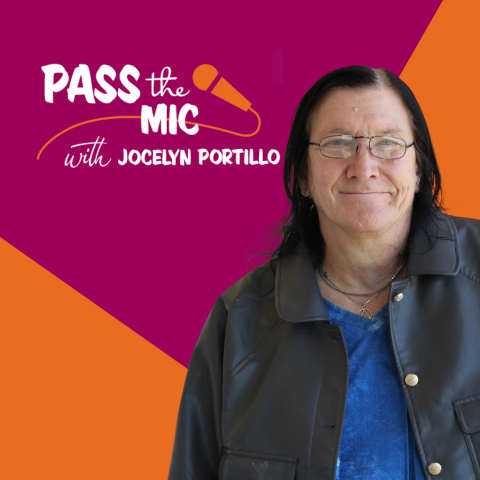
Jocelyn Portillo may be a “Jersey girl” at heart, but she’s built a life of service in Baltimore. Read how she’s turning her passion for helping others into a career.