




Care on speed dial
Client Horace Hollins (left) works on his health goals with Registered Nurse Brooke Gonzalez (right), who is part of our Maryland Primary Care Program (MDPCP) team. MDPCP is an effort to provide highly coordinated primary care and better health outcomes for clients with complex health needs who are enrolled in Medicare or dually eligible for Medicare and Medicaid.
"When things go wrong, she's the first person I call," says client Horace Hollins of nurse Brooke Gonzalez. "He's got me on speed dial," Brooke laughs.
Horace Hollins has a warm smile that immediately draws you in. Behind it is a spirit of perseverance—although he’s modest about his efforts. “I’m just trying to work along with my doctors and do my part,” the 65-year-old Baltimore native says.
Horace has spent the last two decades staying in a mix of rentals and shelters after family members moved away. He was hospitalized five times over the past two years for issues related to congestive heart failure.
In October, Horace started working with Registered Nurse Brooke Gonzalez, who is part of our Maryland Primary Care Program (MDPCP) team. MDPCP is an effort to provide highly coordinated primary care and better health outcomes for clients with complex health needs who are enrolled in Medicare (or dually eligible for Medicare and Medicaid).
Before connecting with Brooke, Horace struggled to get the care he needed. "I wasn't going to physical therapy, to a heart doctor, keeping those kinds of appointments,” he says.
“As Mr. Hollins’ heart failure was advancing, it was hard for him to carry things and take the bus,” adds Brooke. “When you started me up with the Uber rides, it got better,” agrees Horace.
Horace received the good news that an apartment was available for him through an HCH housing program for people assisted by the federal SSI/SSDI Outreach, Access and Recovery program (SOAR). SOAR helps expedite access to federal disability assistance for people with mental health diagnoses.
Housing has been a turning point. Since Horace settled into his apartment in January, he hasn’t been back to the hospital. “I got into better living conditions, and I'm not surrounded by too many people,” he says. “I think that contributed to my running back and forth to the hospital. It just didn’t get right until I got my own spot.”
Brooke sees Horace putting in the effort, too. “He has tried to go to all his appointments and get more connected with people. That has been the biggest change in what's been keeping him healthy—shifting to help himself more.”
“It's like everyone here is working with Mr. Hollins,” she explains, listing off a primary care physician, a housing advocate, an occupational therapist, a case manager and others at Health Care for the Homeless. “I see care coordination as looking at the big picture of a patient's needs.”
“They are doing a good job,” says Horace. “They motivate me.”
Horace recently graduated from physical therapy. “[My health] is starting to improve because I'm taking steps now,” he says. “I went to my appointment and when I got back home, I used the gym and did a workout.”
It’s been rewarding for Brooke, too. “MDPCP has shown me there's so much more I can do as a nurse. I feel proud to be a health care professional who helps people overcome barriers every day.”
"It means a whole lot, knowing that I got somebody in my corner that I can depend on,” Horace says sincerely. “I try not to disappoint her. Everything she does, I appreciate it.”
This summer Horace plans to spend time relaxing and catching up with friends. “Most of what I really like to do is just find me a nice, quiet spot and sit back and enjoy the peace of being in an area where I feel comfortable.”
More Recent News
Earlier this year, the Health Resources and Services Administration and the Bureau of Primary Health Care rolled out 2026 Community Health Quality Recognition Badges. Health Care for the Homeless received four badges
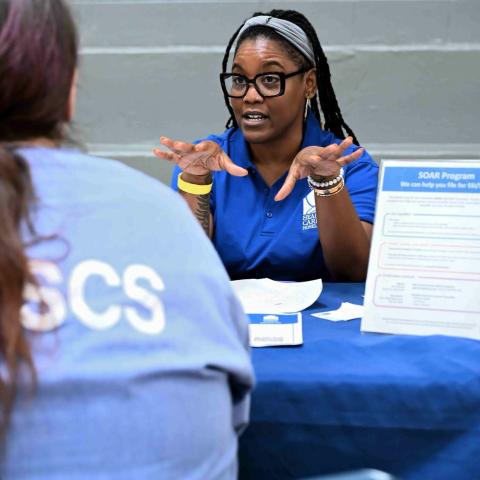
Preparing for reentry starts before release. Discover how Health Care for the Homeless staff are connecting with people behind prison walls, offering support and linking them to resources that can help make the transition home a little easier.

Major changes to Medicaid are coming, and Maryland estimates 175,000 people could lose their health coverage. For people experiencing homelessness, navigating new requirements and maintaining coverage can be especially hard. We talked with Nia Ballard of HealthCare Access Maryland (HCAM) about what’s changing, what she’s hearing from people across Maryland and why keeping people connected to health care matters.
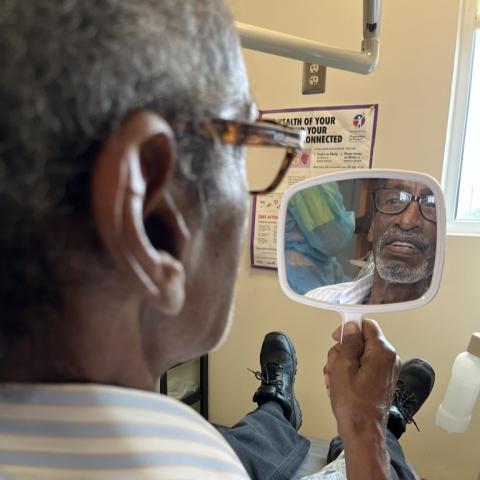
Spend the day with our Fallsway Dental Team and get a behind-the-scenes look at a busy day of cleanings, fillings, dentures and everything in between. Meet the dedicated staff helping clients access the treatment they need while building lasting relationships and healthier smiles.