



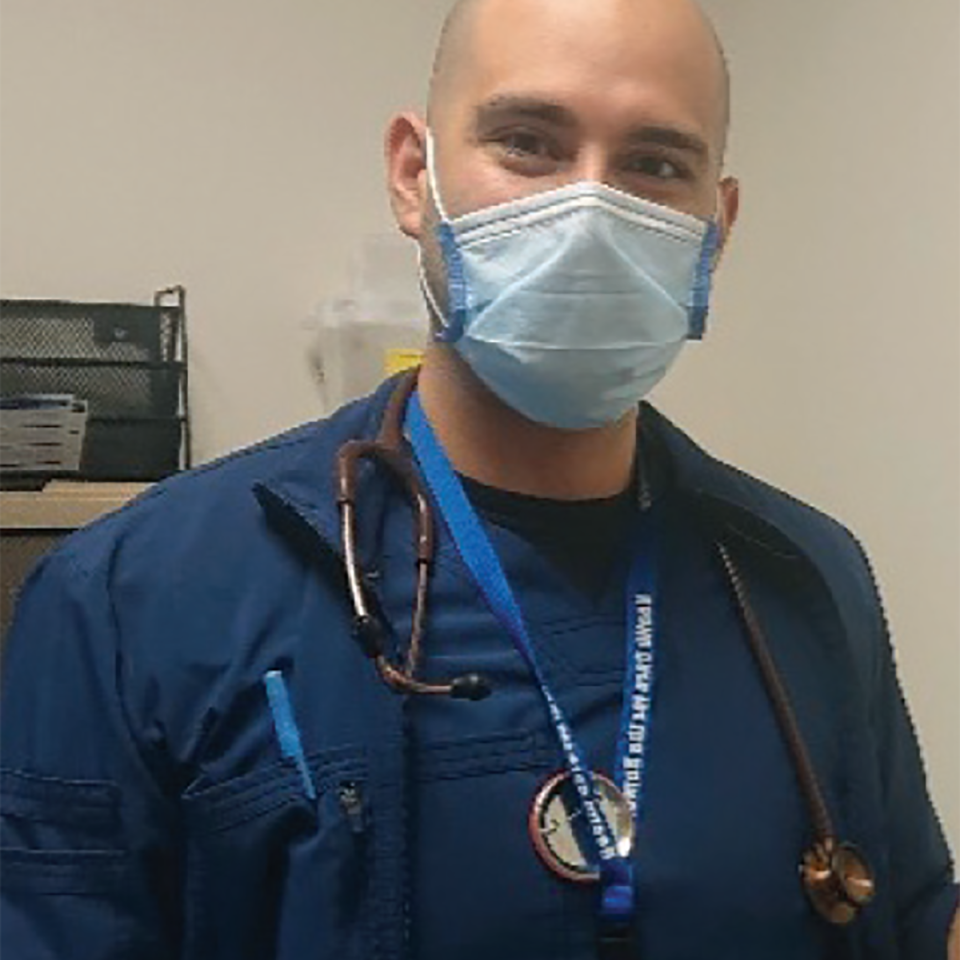
Now you're speaking my language
A calm enters the room with Erick Torres. He sits across from a young girl in her mom’s arms and is fully engaged as they talk through vacunas (vaccines) and developmental milestones. Their meeting flows uninterrupted—there are no gaps for translation—leaving more time to discuss follow-up as the little girl wriggles in her chair.
Erick supports children and families as a bilingual Pediatric Registered Nurse. More than 30% of the clients we see are best served in Spanish—a percentage that is growing every year. And most Hispanic/Latinx families initially come seeking care for their kids.
“When I sit down, clients get so excited,” he laughs. “‘Finally, we have somebody that speaks Spanish!’”
Erick understands that linguistic and cultural barriers impact health outcomes and disempower clients in the exam room.
Each week, he confronts dangerous miscommunications—like a woman who received x-rays of her legs at the hospital, when really her arm was sprained. Or an interpreter who translated the word “lung” as “organ.”
When you share the same language, Erick explains, children and families can have more honest, intimate conversations about their medical histories and health goals. They can more confidently explore a host of topics—from mental health, diet and wellness to sexual health.
“It’s very important to me that [providers] can understand me,” agrees Lila, a mom new to Maryland who was here to get her son up-to-date on his vaccines. “With an interpreter, they’re talking with someone else in English, so you’re not building trust with the person you’re talking to. In your own language, there’s a quality change.
When my nurse or doctor is also Latino, it gives me security that I’m going to be well taken care of.”
Even as word spreads among Hispanic/Latinx communities that Health Care for the Homeless is a safe place to go for care, we have much to do to better meet the needs of Spanish-speaking clients—a priority identified in our Racial Equity and Inclusion Action Plan.
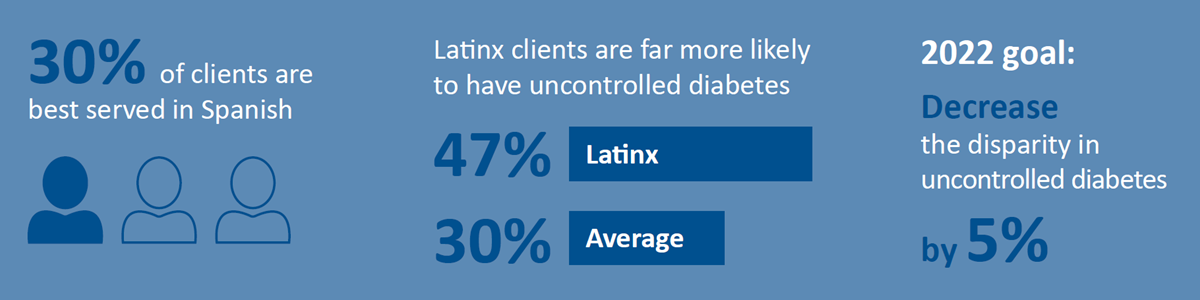
Among the concerning health disparities faced by people in our care, Latinx clients are 57% more likely to have uncontrolled diabetes.
As a first step, we launched bilingual competency tests for each specialty (along with pay premiums). 15 staff have qualified so far. And like Erick’s role, we’re integrating bilingual requirements into many of our job listings.
“Families are definitely getting in contact with us a lot more often,” Erick says, pointing to language access as a key factor.
“There were people in the past we had trouble reaching who are now the one’s calling me,” he chuckles, delighted to see the shift in clients safely and proactively seeking health care. “They ask, ‘Will you be available next Tuesday?’”
“!Sí! Ven a verme.” (Yes, come see me!)
More Recent News

We're excited to welcome Kisun Peters as Health Care for the Homeless' new Director of Finance. Kisun brings more than four years of finance leadership experience to this role, along with a commitment to expanding access to health care. Most recently, he served as Director of Finance & Business Development at Tuerk House, a behavioral health nonprofit in Baltimore. Read on to get to know Kisun better (and find out how he spent his summer)!
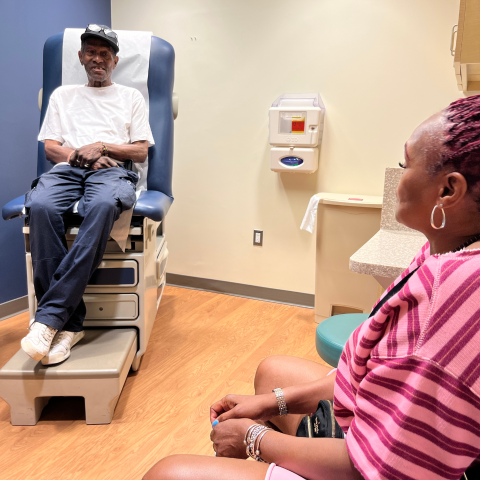
Spend a day with Patient Navigator Kim Taylor and see how hands-on support helps people experiencing homelessness navigate cancer screenings, treatment and a complex health care system. From coordinating referrals to sitting beside clients during appointments, Kim ensures no one faces a cancer diagnosis alone.
From their headquarters in East Baltimore, Moveable Feast designs and delivers thousands of healthy meals each week for people in Central Maryland and on the Eastern Shore (including some Health Care for the Homeless clients). Read about their approach to improving health through nutrition...

If you drive by the corner of Park, Liberty and Fayette, you'll notice some big changes. See how Sojourner Place at Park, our latest housing project in partnership with Episcopal Housing Corporation, is taking shape!