



A pill that prevents HIV
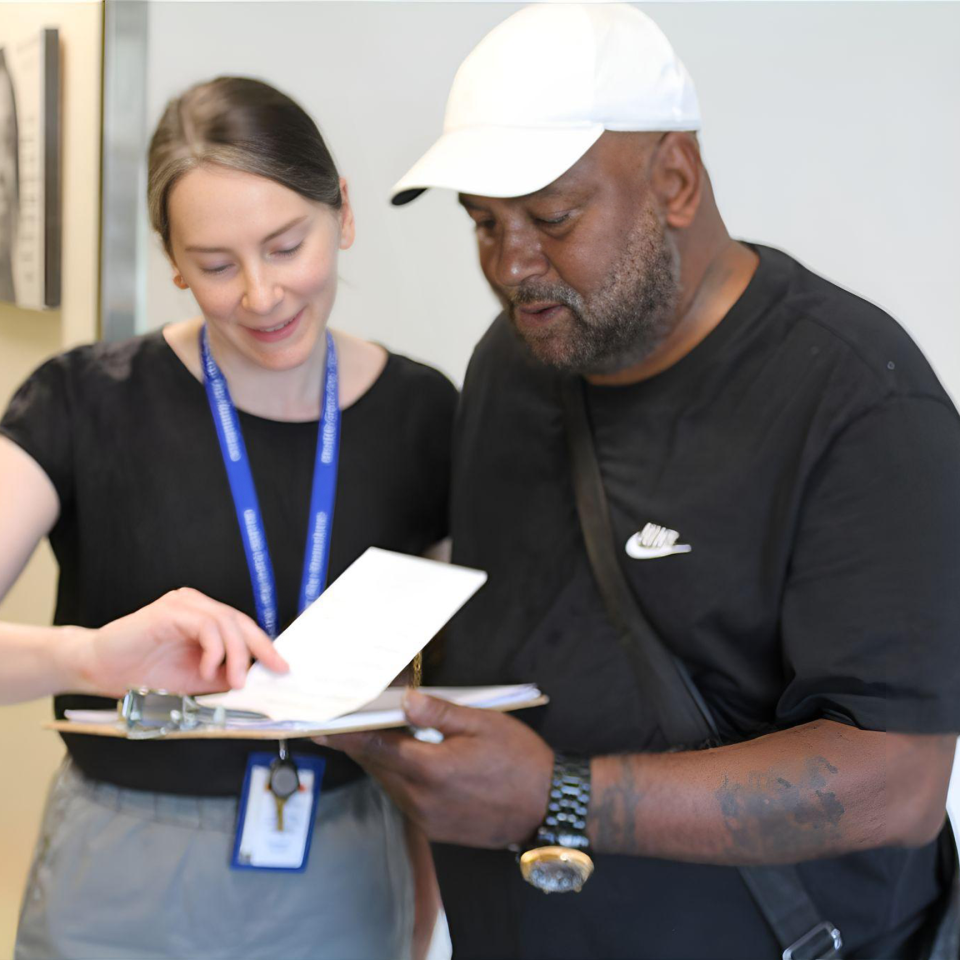
Pictured (above): Dominic Reid and provider Elizabeth Galbrecht, NP review his prescription for PrEP–which he takes to prevent HIV.
When the first medication to prevent HIV became available in 2012, it was a monumental shift—both for people at risk and for public health officials.
“I have a partner who is HIV positive and I’m not,” explains Dominic, who has been taking PrEP (or pre-exposure prophylaxis) daily for four years. “At first I was a little hesitant because I thought [PrEP] was for people who were already positive,” says Dominic. “But my doctor at Health Care for the Homeless explained more about how it worked and said it would be a good option.”
People experiencing homelessness are at higher risk for contracting HIV; PrEP reduces that risk by about 99%. It can provide more security than condoms alone and helps people feel safer in their lives and relationships.
“Unfortunately, the populations who are most disproportionately affected by HIV in the US are the least likely to be prescribed PrEP,” says Nurse Practitioner Elizabeth Galbrecht. Those can include people who use IV drugs and African American women.
According to the CDC, Black women have a higher lifetime risk of contracting HIV, but less than 2% of Black cisgender women eligible for PrEP use it. The earliest forms of PrEP were marketed and approved solely for men who have sex with men, as well as trans women. Many Black women report being unaware they might be eligible for PrEP, or even that it exists.
Despite accounting for 1 in 10 HIV diagnoses in the US, people who use IV drugs aren’t always prioritized in public health. Sharing needles, engaging in sex work, trading drugs for sex—all of these things are risk factors for HIV, emphasizes Dominic.
Harm Reduction staff say it’s been hard to encourage some at-risk clients to try PrEP. That’s in part due to difficulty taking daily medication, concerns about cost and side effects—but it’s also based on misconceptions.
“One thing I really try to say is that PrEP is for everyone,” says MAT RN Sarah Barry. “It’s not just for gay men, it’s not just for people who are at risk through having sex. We work a lot on decreasing stigma.”
Providers must also be educated. There are three forms of PrEP available in the market, and they each serve a unique patient population. Long-acting injectable PrEP can also be a good option for people who have difficulty taking daily medication due to unstable housing.
“I hear a lot of concerns about cost,” says Elizabeth. “But thankfully, PrEP is covered by insurance—and for uninsured clients, we’re even able to provide free access through our neighboring pharmacy.”
“Prescribing PrEP is one of the most rewarding parts of my practice,” she continues. “It’s our responsibility as providers to take a thorough sexual history, identify behaviors that increase HIV risk, and talk about PrEP with all clients.”
For his part, Dominic leverages his lived experience to improve community health. He works at a recovery center and shares his experience with PrEP. “I explain that I haven’t had any side effects. And I talk about how at first I would only remember to take it sometimes—but you have to take it every day for it to work.”
“I tell everyone: it’s made me feel safer,” says Dominic.
Further reading:
More Recent News
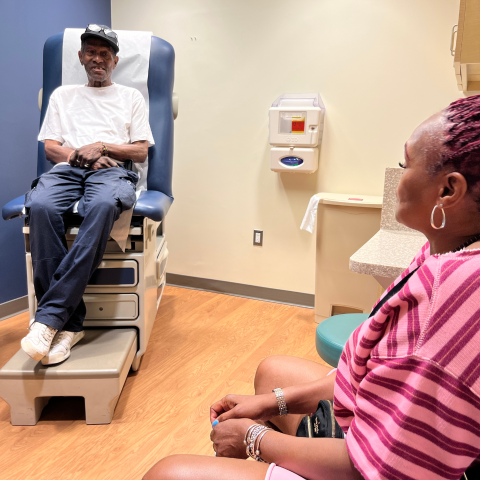
Spend a day with Patient Navigator Kim Taylor and see how hands-on support helps people experiencing homelessness navigate cancer screenings, treatment and a complex health care system. From coordinating referrals to sitting beside clients during appointments, Kim ensures no one faces a cancer diagnosis alone.
From their headquarters in East Baltimore, Moveable Feast designs and delivers thousands of healthy meals each week for people in Central Maryland and on the Eastern Shore (including some Health Care for the Homeless clients). Read about their approach to improving health through nutrition...

If you drive by the corner of Park, Liberty and Fayette, you'll notice some big changes. See how Sojourner Place at Park, our latest housing project in partnership with Episcopal Housing Corporation, is taking shape!
Jocelyn Portillo may be a “Jersey girl” at heart, but she’s built a life of service in Baltimore. Read how she’s turning her passion for helping others into a career.