




Q&A with Lawanda Williams, LCSW-C
Meet our new Chief Behavioral Health Officer
Grounded professionally and academically in social work and public health (she holds both an MSW and MPH from Morgan State University), Lawanda has more than 15 years of clinical, leadership and advocacy experience serving vulnerable populations. Lawanda brings this extensive behavioral health experience to the CBHO role along with 10 years of deep commitment to our work and mission, demonstrated leadership abilities, and the personal and professional embodiment of our core values: dignity, authenticity, hope, justice, passion and balance.
After five years as the Director of Housing Services, what drew you to the Chief Behavioral Health Officer position?
The CBHO position provides a great opportunity to deliver care in a new way. Being in this role allows me to contribute to the phenomenal work already being done within our behavioral health division. I look forward to the opportunity to build upon our current work, shape the vision for the work ahead and enhance our capacity to provide high quality care.
You have led unprecedented growth in our supportive housing program. Will you still have a hand in our housing work as CBHO?
Yes! The Housing Services department resides within our Behavioral Health division. I remain as excited about our housing work and growth as I’ve ever been. I very much view the provision of housing as a matter of justice and I will always seek ways to contribute to a more just society for those we serve. For a very, very long time, I could recall the name of almost every client in our housing program and least three facts about them. That will obviously no longer be possible, but I don’t need to know every client to vigorously work on their behalf.
The CBHO position is new as of 2020. Why do you think it’s important to have a behavioral health perspective at the executive level?
As an organization committed to serving the whole person, it is critically important to have a behavioral health lens at the highest level within the organization. This helps to ensure that themes of wellness, for clients and staff alike, permeate throughout the organization in ways that impact our policies, procedures, practices and perspectives.
What was your path to Health Care for the Homeless?
I worked in long-term care. While there, I had the opportunity to work with people living with HIV/AIDS and found that work extremely rewarding. Interestingly enough, many of the residents admitted to the nursing home were also experiencing housing instability for myriad reasons. Engaging in that work intrinsically meant that I’d also be helping residents address homelessness. When I saw a position for a case manager with the Connect Project at Health Care for the Homeless, I was intrigued and applied. The agency decided to hire me. That was nearly ten years ago.
What keeps you motivated in the midst of such a challenging year?
Challenges are things waiting for solutions. In all of my years, I’ve never experienced a problem that didn’t have an endpoint. Holding onto that premise keeps me motivated and gives me hope, even in the face of a global pandemic. My faith and family are very important to me and give me a sence of purpose. The strength demonstrated by our clients and staff, day in and day out, gives me a lot to aspire to.
How did you celebrate your promotion?
I ate a pint of Taharka Brothers Caramel Crunch ice cream. It was absolutely divine! Please treat yourself.
Any fun facts to share about yourself?
I love gardening with my bare hands, and I often do it with bare feet. I appreciate being connected to the earth.
Congratulations, Lawanda!
More Recent News
Earlier this year, the Health Resources and Services Administration and the Bureau of Primary Health Care rolled out 2026 Community Health Quality Recognition Badges. Health Care for the Homeless received four badges
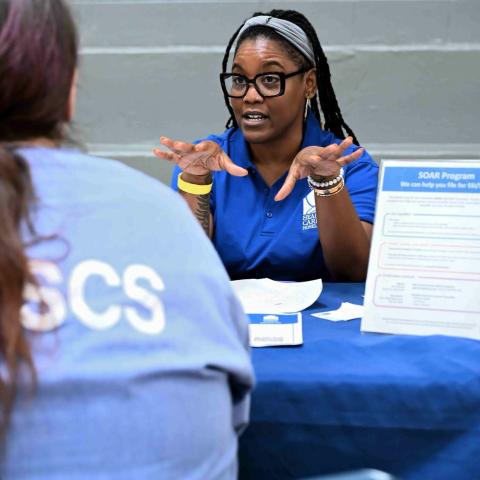
Preparing for reentry starts before release. Discover how Health Care for the Homeless staff are connecting with people behind prison walls, offering support and linking them to resources that can help make the transition home a little easier.

Major changes to Medicaid are coming, and Maryland estimates 175,000 people could lose their health coverage. For people experiencing homelessness, navigating new requirements and maintaining coverage can be especially hard. We talked with Nia Ballard of HealthCare Access Maryland (HCAM) about what’s changing, what she’s hearing from people across Maryland and why keeping people connected to health care matters.
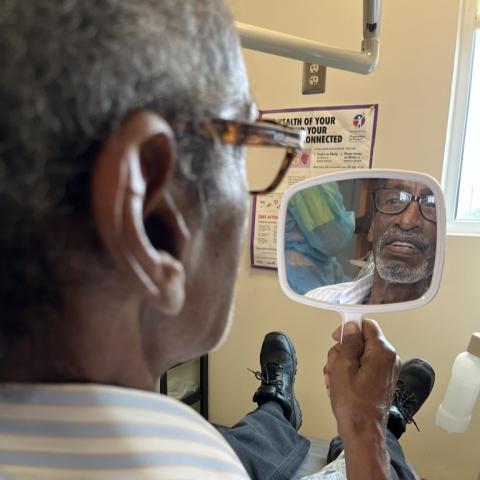
Spend the day with our Fallsway Dental Team and get a behind-the-scenes look at a busy day of cleanings, fillings, dentures and everything in between. Meet the dedicated staff helping clients access the treatment they need while building lasting relationships and healthier smiles.