




Substance Use-Disorder Legislation: A Step in the Right Direction
Earlier this month, Congress and the Administration passed The Substance Use-Disorder Prevention that Promotes Opioid Recovery and Treatment for Patients. This legislation builds upon past grants and provisions to address opioid and substance use disorders through expansions of medication-assisted treatment, recognition of peer supports as crucial to recovery, and acknowledgement of housing as part of the broader solution.
The President is expected to sign the bill into law next week, but much work remains. According to the National Health Care for the Homeless Council's Senior Director of Policy, Barbara DiPietro, this legislation is a "patch work" of incremental changes that is a step in the right direction, but does not make the substantive changes needed to fully address the addiction crisis. Further measures need to be taken, such as the funding in the CARE Act, discussed by Congressman Elijah Cummings and Senator Elizabeth Warren during their visit to our Downtown clinic in July.
For now, members of the National Health Care fore the Homeless Council identified five priority areas from this legislation related to our work and mission:
Expand funding for housing through:
- Recognizing that housing plays a huge part in substance use recovery. Once signed, reports on success related to housing and substance use recovery will be created and used to build best practices for future housing programs. According to National Health Policy Organizer Regina Reed, while these provisions "are no where near what we wanted, we were happy to see that housing was even mentioned. We are always excited when housing is mentioned with health care - it's so rare."
Expand access to evidence-based addiction treatment through:
- Authorizing clinical nurse specialists, certified nurse midwifes and certified registered nurse to dispense MATs for five years, and giving permanent prescribing authority to physician assistants and nurse practitioners. Also, allowing waivered practitioners who are board certified in addiction medicine or addiction psychiatry the immediate ability to treat 100 clients at a time, and qualified physicians the ability to prescribe MAT for up to 275 clients.
- Making small expansions to and solidifying the existence various Medicare and Medicaid treatment programs.
Increase capacity for emergency over dose response through:
- Expanding a grant program that allows first responders to administer naloxone and trains them on how to safely treat an opioid overdose.
Expand workforce opportunities through:
- Creating more opportunities and federal support for those in peer-support professions, not unlike our peer advocates, to work with clients experiencing a substance use disorder.
Increase capacity for hard reduction programs
- Despite our consistent provision requests to expand Opioid-Associated Disease Prevention and Outreach Programs (OADPOP) and safe consumption sites, they were not included in this legislation. Barbara is currently working the Harm Reduction Coalition to figure out how we can best utilize state and local resources to make safe use sites a priority.
More Recent News

We're excited to welcome Kisun Peters as Health Care for the Homeless' new Director of Finance. Kisun brings more than four years of finance leadership experience to this role, along with a commitment to expanding access to health care. Most recently, he served as Director of Finance & Business Development at Tuerk House, a behavioral health nonprofit in Baltimore. Read on to get to know Kisun better (and find out how he spent his summer)!
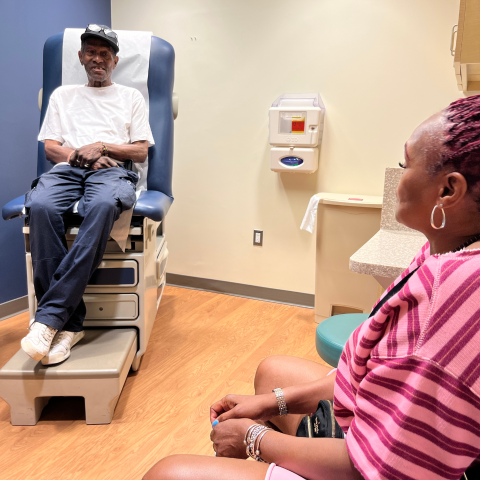
Spend a day with Patient Navigator Kim Taylor and see how hands-on support helps people experiencing homelessness navigate cancer screenings, treatment and a complex health care system. From coordinating referrals to sitting beside clients during appointments, Kim ensures no one faces a cancer diagnosis alone.
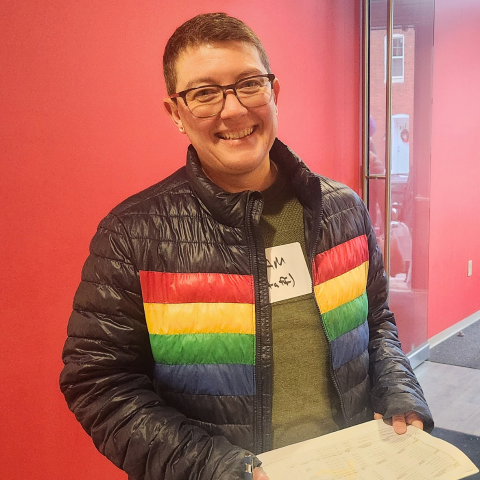
From their headquarters in East Baltimore, Moveable Feast designs and delivers thousands of healthy meals each week for people in Central Maryland and on the Eastern Shore (including some Health Care for the Homeless clients). Read about their approach to improving health through nutrition...

If you drive by the corner of Park, Liberty and Fayette, you'll notice some big changes. See how Sojourner Place at Park, our latest housing project in partnership with Episcopal Housing Corporation, is taking shape!