



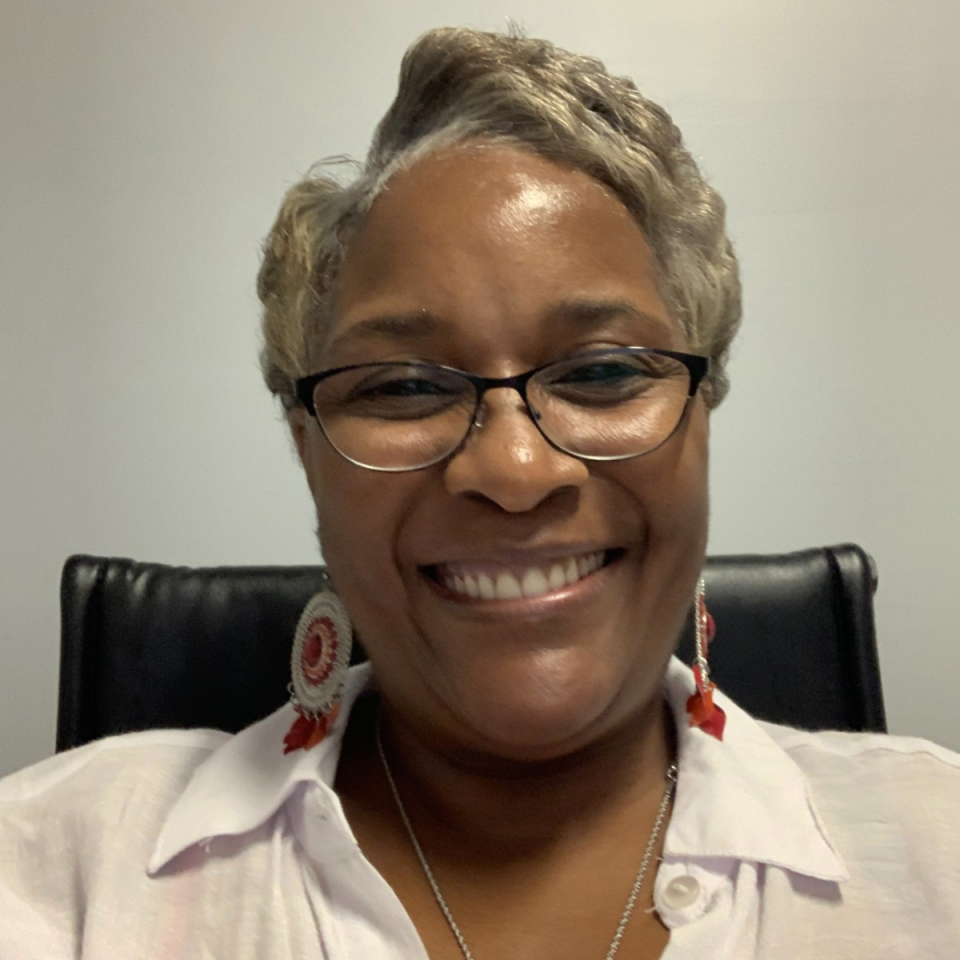
Meet our New Director of Recovery Services
Q&A with Tammy Montague, PhD, LCSW-C
After nearly eight years with Health Care for the Homeless, Tammy Montague, PhD, LCSW-C is stepping into a brand new Director of Recovery Services role!
Tammy joined Health Care for the Homeless after serving as a Case Manager/Advocacy Counselor at Project PLASE, where she built strong partnerships with community organizations and health care providers to help clients access essential services. In 2024, she earned her PhD in Human & Community Services from Walden University. Her dissertation explored firsthand perspectives on safer use strategies among individuals with lived experience of homelessness and substance use. After roles in our Housing Services team as a Therapist Case Manager (TCM) for clients with HIV and Lead TCM, Tammy most recently oversaw the agency’s administration of the Assistance in Community Integration Services Program (ACIS), a state Medicaid program that provides care and support to help people maintain their housing after experiencing homelessness.
As a Core Value Awardee for Balance, Tammy advocates for compassionate care for oneself and others. And, if you attend the Staff Retreat or Open Mic, you may be treated to her beautiful singing voice!
You’ve been with Health Care for the Homeless since 2018. What has kept you here and motivated your growth into this role?
I believe when an agency’s values and mission match one’s own personal beliefs, it brings about connectedness. I feel connected to the work and mission of Health Care for the Homeless, and more broadly, I’ve come to understand how this work helps clients, families, communities, the government and society at large. It’s encouraging to me and has allowed me to see clear pathways to career growth.
This new role is particularly special to me. Recovery not only spans across lives but across disciplines. When I started as a TCM, I worked with clients with co-occurring disorders and found that an integrative treatment approach was necessary. I see an important part of the Director of Recovery role as bridging disciplinary gaps so that people can be made whole.
How has your experience in housing services shaped your approach to recovery services agency-wide?
I would first say that housing is health care. Housing services are unique in that some people see them as an island. However, housing can be a driver, so to speak, for what dreams are made of. I’ve seen despair, but I have also seen clients come out of despair by way of a set of keys that opens a door to restoration and recovery. Housing is motivating and 'hope fulfilled.' When I think about recovery services agency-wide, I will approach them in the same manner, widening the umbrella for those who want to change their lives for the better.
As Director of Recovery, what are some of your new responsibilities? Which departments or staff do you oversee?
My responsibilities entail providing strategic and operational leadership for substance use and recovery-oriented services. I will be responsible for the integration of substance use disorder services across agency programs and service locations, ensuring equitable access to care for individuals experiencing homelessness.
We currently have a Senior Peer Recovery Specialist working on the team, and we are recruiting for a Substance Use Counselor. In addition, we will have two interns come aboard in the next month or so to assist with building out our program.
How will this look different from the access to recovery services we currently offer?
Health Care for the Homeless currently offers an Outpatient Program (OP) for people seeking recovery. OP focuses on maintaining progress, preventing relapse and offering ongoing guidance. It’s a flexible option for people who are more stable in recovery.
What's changing is that we have an opportunity to help people who are not as stable in recovery and whose lives are at risk. If I may quote from my dissertation, "Researchers have found that 50% of homeless individuals have a substance use disorder with a reduction in life expectancy compared to the general population." There are people who are caught up in the vicious cycle of addiction and who desire a better life for themselves. Our new recovery program will offer Intensive Outpatient Program (IOP) services in a way that is client-focused, goal-oriented, respectful and without shaming. We haven't quite finalized everything, but we will be doing group meetings daily (Mon-Fri). We will also have one-on-one counseling support at least twice a month. We will be starting groups at 421 but quickly branching out across agency sites including mobile services.
How do you measure success in recovery services?
Recovery is multi-dimensional, and so while quantifying the problem is easy, quantifying the solution and success is more complex. Individuals recover at different rates and stages. What recovery looks like to one person may look different to another. For example, a person may want to work on improving their decision-making around substance use. This could be total abstinence from drug use, an incremental reduction in their use or a medication-assisted treatment approach.
In measuring agencywide success in our IOP services, I will look at retention, admissions and intakes, client satisfaction surveys and use the ASI (Addiction Severity Intake) assessment as an evidence-based tool for tracking data over time.
What excites you most about stepping into this role right now?
I’m excited about helping the agency move forward in a space that traditionally has been known as "treatment." While treatment for substance use primarily deals with treating the symptoms, recovery is a lifestyle. There is no one-size-fits-all cure for addiction. We have to treat the symptoms while also assisting individuals with resources to help them learn and deal with their condition.
Outside of work, what helps you stay grounded and energized?
I've had to recover from many things, but the one thing that has helped me more than anything is my faith—"the substance of things hoped for, the evidence of things not yet seen." Part of the evidence of my faith has been revealed to me through my personal recovery. Thus, my recovery helps me to stay grounded and energized.
Congratulate Tammy when you see her!
More Recent News
Earlier this year, the Health Resources and Services Administration and the Bureau of Primary Health Care rolled out 2026 Community Health Quality Recognition Badges. Health Care for the Homeless received four badges
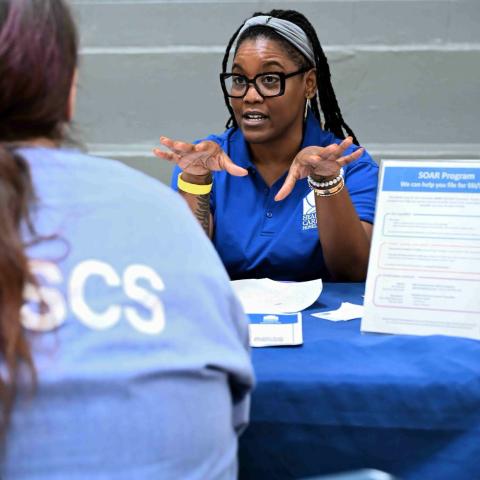
Preparing for reentry starts before release. Discover how Health Care for the Homeless staff are connecting with people behind prison walls, offering support and linking them to resources that can help make the transition home a little easier.

Major changes to Medicaid are coming, and Maryland estimates 175,000 people could lose their health coverage. For people experiencing homelessness, navigating new requirements and maintaining coverage can be especially hard. We talked with Nia Ballard of HealthCare Access Maryland (HCAM) about what’s changing, what she’s hearing from people across Maryland and why keeping people connected to health care matters.
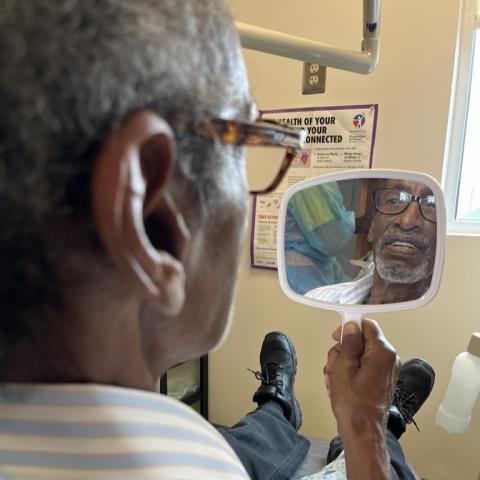
Spend the day with our Fallsway Dental Team and get a behind-the-scenes look at a busy day of cleanings, fillings, dentures and everything in between. Meet the dedicated staff helping clients access the treatment they need while building lasting relationships and healthier smiles.