



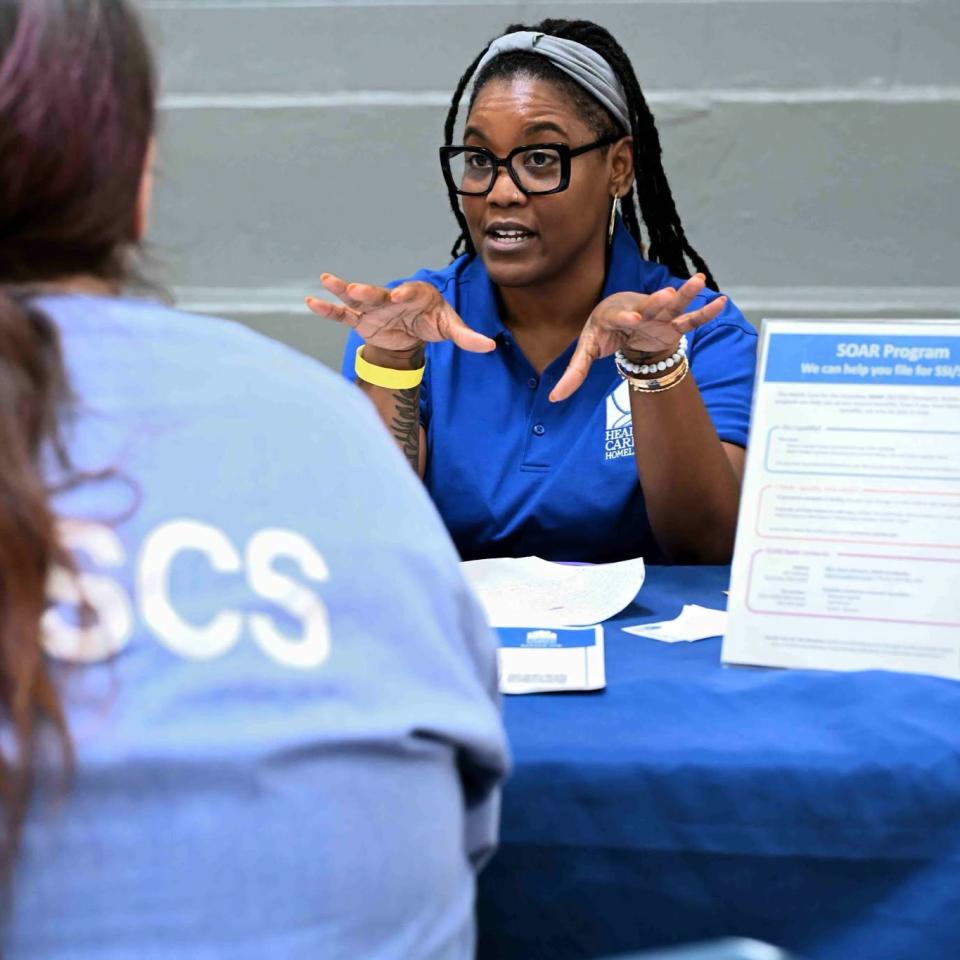
Care beyond the walls
Preparing for reentry starts before release. Discover how Health Care for the Homeless staff are connecting with people behind prison walls, offering support and linking them to resources that can help make the transition home a little easier.
People returning to the community after incarceration often face significant barriers to stable housing and health care. A study by the Prison Policy Institute found that people leaving prison are 10 times more likely to experience homelessness than the general public.
This year, Health Care for the Homeless is reaching people earlier through Behind the Walls, a series of resource fairs held at prisons across Maryland. The fairs give people nearing their release dates the opportunity to connect with state agencies and community service providers.
This work comes at a time of growing state investment in helping people prepare for reentry. Last July, Governor Moore and the Maryland Department of Public Safety and Correctional Services (DPSCS) announced an expansion of Behind the Walls. The state also implemented a Medicaid program that allows some people with serious mental health or substance use conditions to get health coverage before they are released.
“Successful reentry begins well before an individual walks out of our doors,” said Maryland Department of Public Safety and Correctional Services Secretary Carolyn J. Scruggs. “We are grateful for our partnership with Health Care for the Homeless and for their commitment to meeting individuals where they are. By bringing critical health care, housing and support resources directly into our facilities, we can help people better prepare for the challenges they may face upon release and connect them with services that can provide stability as they return to their communities.”
At the fairs, our staff share information about our services and help people understand whether they qualify for care.
“A lot of people view homelessness as living on the street as opposed to staying with somebody temporarily,” says SSI/SSDI Outreach, Access and Recovery (SOAR) Coordinator Sharmina Davis-Harrison. “You might plan on staying with friends or family, but if they get evicted or ask you to go, you're at risk.”
Housing instability is only part of the challenge of coming home. “Coming out, people have to get acclimated to a world that might be totally different,” says Director of Engagement and Community Relations Malcolm Williams. “That can be extremely overwhelming.”
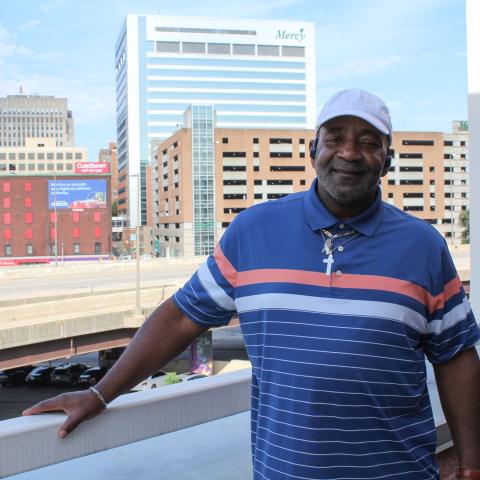
Wactor Pierce returned to the community in December 2025 after spending almost eight years in prison. “I didn't have a clue about where I was going,” says Wactor, who now lives in a transitional housing program.
He describes reentry as a “roller coaster.”
“We come home with so many emotions,” says Wactor, who is working with both a caseworker and therapist. “I have an outlet where I can go and talk about things that are going on in my daily life.”
“Being locked up can be a traumatic event,” says Malcolm. “We let people know about the importance of connecting with behavioral therapists and we talk about the resources of SOAR.” Through SOAR, staff help people with severe mental health disabilities who are at risk of homelessness access Social Security benefits.
Wactor’s experience also shows why connecting to health care quickly matters. After his release, a gap in insurance left him without access to medications he needed.
“I had maybe 10 medications, and they were well over $1,000 a month,” he recalls. “On that first day [at Health Care for the Homeless], I was able to get connected with a primary care physician and get my medication addressed.”
For many participants, a conversation at Behind the Walls is only the beginning. Following a recent fair at the Baltimore City Correctional Center, Sharmina gathered contact information from two dozen interested people. Some have since connected with her directly, while others have reached out through family members or case managers.
“We can take something off their plate,” she says. “We can't remove every challenge, but we can be a source of relief.”
Spread the word. If you or someone you know is returning to the community after incarceration, we're here to help. Visit hchmd.org/contact-us to get connected.
More Recent News
Earlier this year, the Health Resources and Services Administration and the Bureau of Primary Health Care rolled out 2026 Community Health Quality Recognition Badges. Health Care for the Homeless received four badges
Preparing for reentry starts before release. Discover how Health Care for the Homeless staff are connecting with people behind prison walls, offering support and linking them to resources that can help make the transition home a little easier.

Major changes to Medicaid are coming, and Maryland estimates 175,000 people could lose their health coverage. For people experiencing homelessness, navigating new requirements and maintaining coverage can be especially hard. We talked with Nia Ballard of HealthCare Access Maryland (HCAM) about what’s changing, what she’s hearing from people across Maryland and why keeping people connected to health care matters.
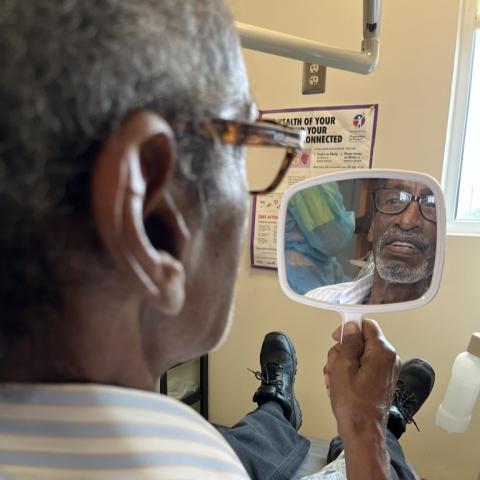
Spend the day with our Fallsway Dental Team and get a behind-the-scenes look at a busy day of cleanings, fillings, dentures and everything in between. Meet the dedicated staff helping clients access the treatment they need while building lasting relationships and healthier smiles.