



How can I help?
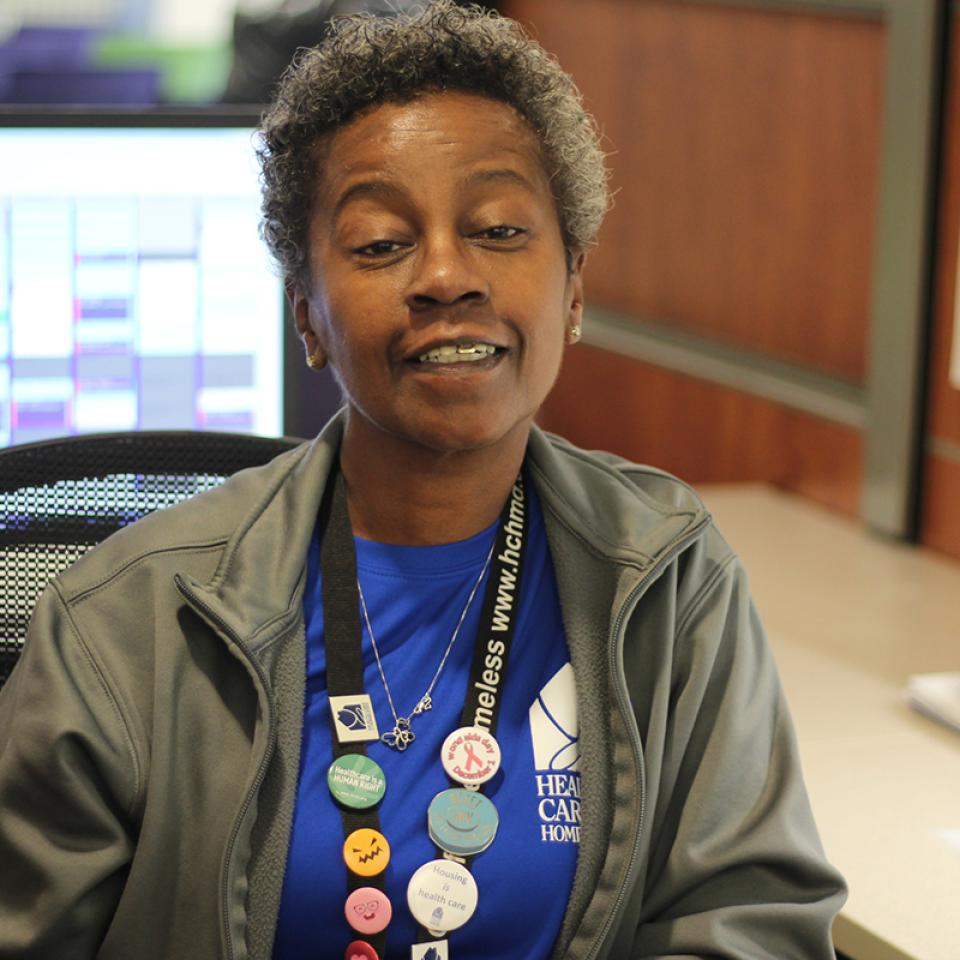
Julia Felton gives a window into her work at the front desk.
Q: What do you do at Health Care for the Homeless?
As a Client Access Associate, my job is to find out what people need, register them and direct them to care. We see 100 to 200 clients on a normal day at the downtown clinic. I also help set the tone. If I came to an organization and I was ignored or disrespected, I wouldn’t come back. I have the chance to make sure clients have a healthy experience.
Q: What does it take to be successful at your job?
Compassion. Empathy. I’m motivated by the people we serve. I’ve been in a situation where my children and I have been homeless. I was never on the street, but I can relate. I want to see people become housed, healthy and mentally stable. I look forward to clients who come back and say, “You helped me a lot,” or “This is a better day.”
Q: What is rewarding about your job?
People come in feeling hopeless, helpless and emotionally distraught. I try to stay calm and build a good rapport. There was a client who used to yell at me every morning, and I’d just say “Hello.” Then one day he said “Good morning” instead. I was ecstatic! Later, he told me that he lost his housing after he got hurt and couldn’t play football anymore. He went from a man who used to yell at me to a man who wanted to sit and have a conversation. It was very touching.
Interested in joining a team that values dignity and authenticity?
Look at open positions here.
More Recent News

We're excited to welcome Kisun Peters as Health Care for the Homeless' new Director of Finance. Kisun brings more than four years of finance leadership experience to this role, along with a commitment to expanding access to health care. Most recently, he served as Director of Finance & Business Development at Tuerk House, a behavioral health nonprofit in Baltimore. Read on to get to know Kisun better (and find out how he spent his summer)!
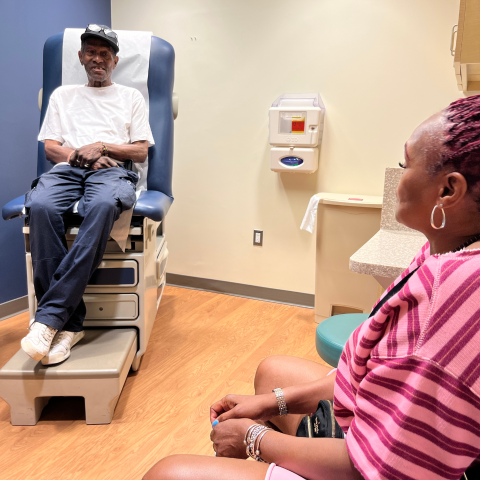
Spend a day with Patient Navigator Kim Taylor and see how hands-on support helps people experiencing homelessness navigate cancer screenings, treatment and a complex health care system. From coordinating referrals to sitting beside clients during appointments, Kim ensures no one faces a cancer diagnosis alone.
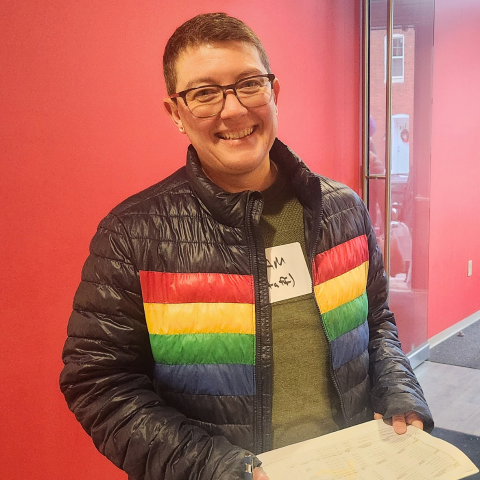
From their headquarters in East Baltimore, Moveable Feast designs and delivers thousands of healthy meals each week for people in Central Maryland and on the Eastern Shore (including some Health Care for the Homeless clients). Read about their approach to improving health through nutrition...

If you drive by the corner of Park, Liberty and Fayette, you'll notice some big changes. See how Sojourner Place at Park, our latest housing project in partnership with Episcopal Housing Corporation, is taking shape!