




Living healthy shouldn't be this hard
Darrin Chambers is preparing to celebrate eight years with his fiancé Audre* this November. "We got it all here," he laughs. "I got boys, she got girls. We've made ourselves a 'Brady Bunch' situation."
Darrin has brought himself a long way from the years he spent on the street, navigating piecemeal treatment for HIV and schizophrenia, to his sunny apartment in South Baltimore. "I learned to be a survivor out there," he says, "living in those abandoned houses, that's where I stored all my important documents and HIV medication."
"I turned to using [drugs] as a way to self-medicate," says Darrin, reflecting on the state of his care at that time.
What began as a means of mental health maintenance quickly developed into dependency. "My motivation being out there was just to make it through the day intact," he says, "but I lost myself in addiction."
Darrin's journey changed when he met Audre, just months into her own recovery. "I made those first steps on my own," he says, "because I loved her so much. It created something in me and I wasn't going to let that go." Over the next several years Darrin worked at his recovery with support from Helping Up Mission, who recommended Health Care for the Homeless to him.
Darrin quickly bonded with his new primary care provider, Dr. Iris Leviner, who outlined a tailored course of HIV treatment. "She really sat me down and explained the function of white blood cells and 'viral load,' and what it means for my body," he remembers. Based on Darrin's requests, Dr. Leviner identified a therapist and psychiatrist at the agency to help him manage his schizophrenia and substance use disorders.
"Once I was prescribed the appropriate medications to manage my mental health and HIV, the quality of my life improved dramatically." Today, Darrin's HIV viral load is undetectable and he cannot transmit transmit the virus to others. With proper medication and a stregthened immune system, Darrin began to feel an easing in schizophrenic episodes. He was also able to build up a greater committment to his sobriety.
From the comfort of home, Darrin has space now to care for himself and the people in his life.
"I've equipped myself mentally, physically and spiritually to deal with life," he says proudly. "Now I'm a provider for my family and I love that."
*this is a pseudonym
No one should have to manage their health alone. Click here to learn more about our whole-person approach to care.
More Recent News
Earlier this year, the Health Resources and Services Administration and the Bureau of Primary Health Care rolled out 2026 Community Health Quality Recognition Badges. Health Care for the Homeless received four badges
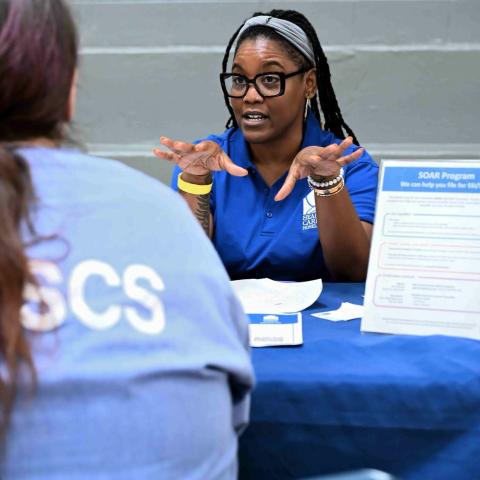
Preparing for reentry starts before release. Discover how Health Care for the Homeless staff are connecting with people behind prison walls, offering support and linking them to resources that can help make the transition home a little easier.
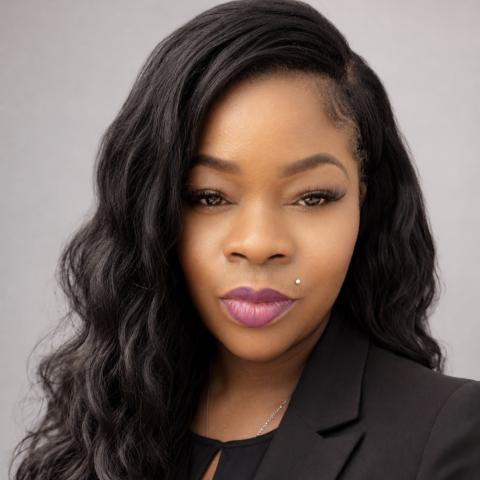
Major changes to Medicaid are coming, and Maryland estimates 175,000 people could lose their health coverage. For people experiencing homelessness, navigating new requirements and maintaining coverage can be especially hard. We talked with Nia Ballard of HealthCare Access Maryland (HCAM) about what’s changing, what she’s hearing from people across Maryland and why keeping people connected to health care matters.
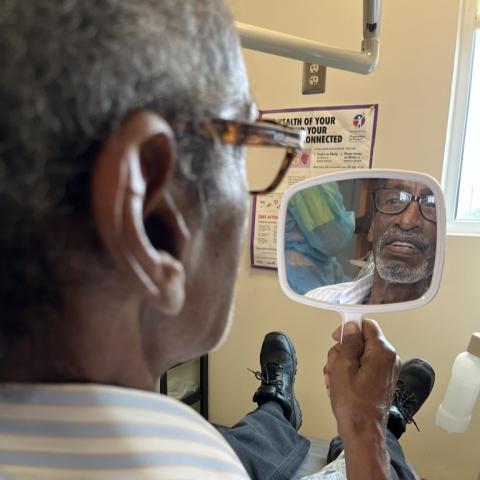
Spend the day with our Fallsway Dental Team and get a behind-the-scenes look at a busy day of cleanings, fillings, dentures and everything in between. Meet the dedicated staff helping clients access the treatment they need while building lasting relationships and healthier smiles.