



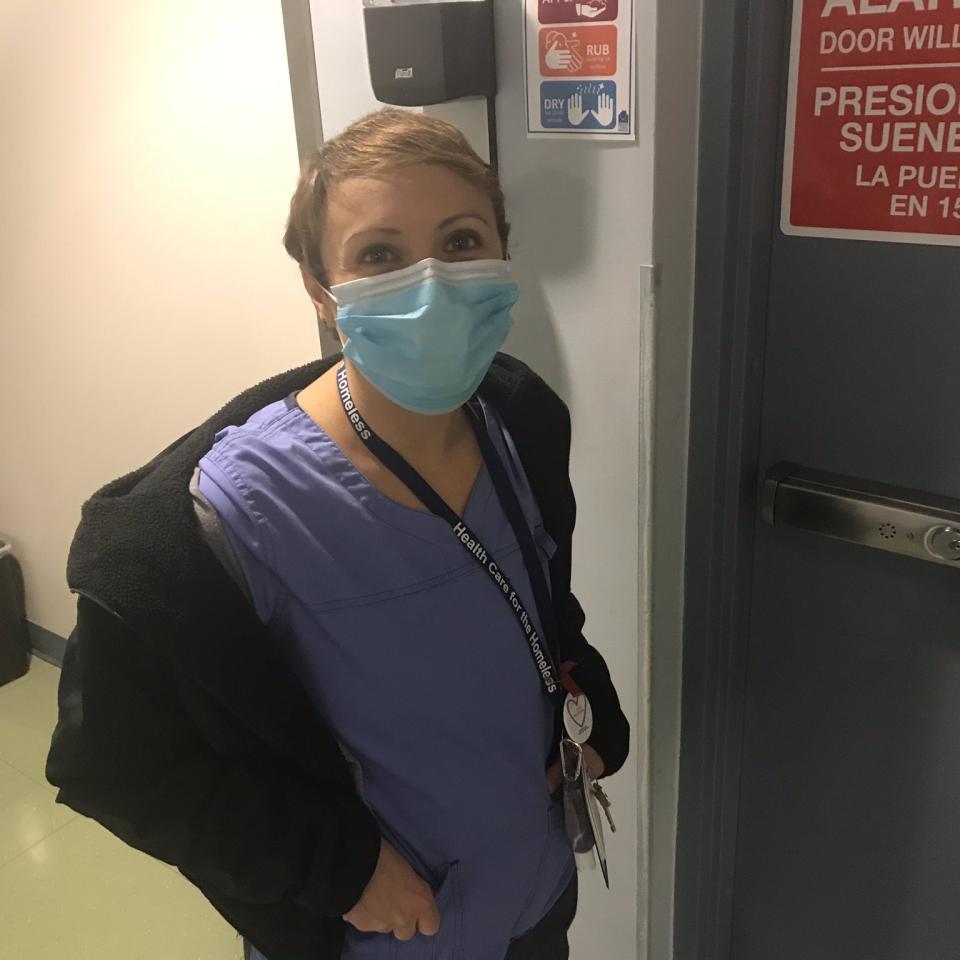
Our job is not to judge
Medication-Assisted Treatment Nurse Coordinator Molly Greenberg discusses how our new Opioid-Associated Disease Prevention and Outreach Program (OADPOP) complements our commitment to equitable access to care.
This year we became the first Federally Qualified Health Center in Maryland to establish an OADPOP, joining 15 organizations already operating these programs. As smaller OADPOPs had to alter services during the pandemic, it became clear that offering clients who inject drugs a safe place to get clean needles was long overdue.
Can you give some background on Opioid-Associated Disease Prevention and Outreach Programs (OADPOP)?
Community activists formed the first program in 1988 in San Francisco to help stop the spread of HIV among people who use drugs. Baltimore-based organizations like Baltimore Harm Reduction Coalition, Baltimore City Needle Exchange, Youth Empowered Society, SPARC and more have paved the way for us to offer this service.

How are clients reacting to the launch of OADPOP?
Clients have been asking about this for years. They often experience stigma and judgment from health care providers when discussing their substance use. Some have told me they avoid care for fear of being mistreated. OADPOP provides a space to be their authentic selves in a medical setting.
What does an OADPOP visit look like?
The client is always the expert. We talk about their drug use and work together to get them what they need. We have the opportunity to provide wound care, connect clients to STI testing, medication for opioid use disorder or any other services that align with their goals or needs.
Why is the launch of OADPOP especially important now?
Fentanyl has caused increased in overdoses for a long time. But, we also know that addiction is a disease rooted in and often fueled by loneliness. So many of my clients are feeling even more alone because of the pandemic and are having difficulty not using alone—putting them at a much greater risk of overdosing. Being able to offer OADPOP reminds clients that their lives are valued.
Where do structural racism and stigma around substance use intersect?
There are several intersections. The opioid epidemic only gained recognition when white suburbanites started to die. The War on Drugs places individual responsibility for addiction on People of Color and criminalizes them. If people fear that they will be judged because of their race and substance use, they are unlikely to access services in the first place.

What should community members take away from this conversation?
For deaths to decrease and for people to feel worthy of quality care, we need to take the time to understand the trauma they have faced. Then we need to exercise our power to change the legal, cultural and political systems that continue to cause that trauma.
More Recent News

We're excited to welcome Kisun Peters as Health Care for the Homeless' new Director of Finance. Kisun brings more than four years of finance leadership experience to this role, along with a commitment to expanding access to health care. Most recently, he served as Director of Finance & Business Development at Tuerk House, a behavioral health nonprofit in Baltimore. Read on to get to know Kisun better (and find out how he spent his summer)!

Spend a day with Patient Navigator Kim Taylor and see how hands-on support helps people experiencing homelessness navigate cancer screenings, treatment and a complex health care system. From coordinating referrals to sitting beside clients during appointments, Kim ensures no one faces a cancer diagnosis alone.
From their headquarters in East Baltimore, Moveable Feast designs and delivers thousands of healthy meals each week for people in Central Maryland and on the Eastern Shore (including some Health Care for the Homeless clients). Read about their approach to improving health through nutrition...

If you drive by the corner of Park, Liberty and Fayette, you'll notice some big changes. See how Sojourner Place at Park, our latest housing project in partnership with Episcopal Housing Corporation, is taking shape!