



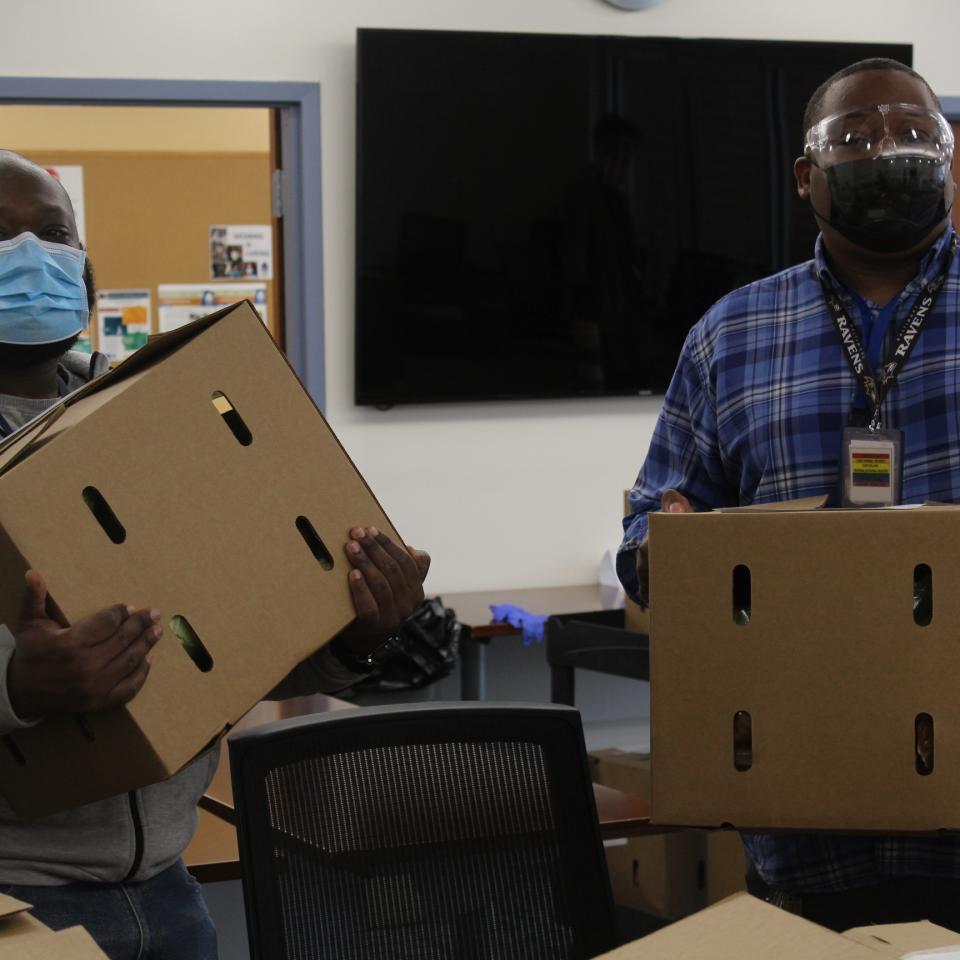
Putting health on the menu for everyone
"The closest thing to a vegetable was a pickled onion,” says Board Member Randi Woods, reflecting back on her childhood trips to the store in Southwest Baltimore. “You see, my elder brother, sister and I were latchkey kids. And while our parents were at work, we would often go to the convenience store and load up on honey buns, Now & Laters and chips.”
While this is a fond childhood memory, Randi explains, it is also a reality grocery list for many city residents today.
“It’s indicative of a larger problem in Baltimore,” she says.
People living in predominantly Black and low-income Baltimore neighborhoods face food apartheid.* Their communities are hyper-saturated with cheap, highly processed foods and liquor stores, and they are targets of marketing campaigns for these items. Simply to find healthy food choices, they often must take multiple buses (and hours) to the closest grocery store and bring home only what they can carry, requiring multiple trips each week. It’s no wonder that Black and Latinx/Hispanic communities have the highest rates of hypertension and diabetes, respectively. Coordinator of Community Health and Outreach Lilian Amaya and her team witness the destructive results of food apartheid each day at Health Care for the Homeless.
“We’re seeing more clients who have nowhere else to turn,” Lilian says, acknowledging the COVID safety concerns that have exacerbated existing barriers to food. “Right now, everyone is working really hard to get food on the table so that kids aren’t starving, the elderly aren’t going without food—that’s the reality on the ground.” To address real-time emergency needs, community health workers (CHWs) and outreach workers have forged relationships with food pantries and churches across the city, and they drop off boxes each week to particularly vulnerable clients.
This month, with funding from private donors, we also launched an in-house food pantry at our downtown clinic. Clients who need food today can walk out of their health appointment with one-to-two days’ worth of shelf-stable food—no cooking required.
“I’m grateful we can provide the food,” CHW Briauna Wills adds. “But it’s disheartening, too. Many clients aren’t eligible for government assistance, and we can’t establish an ongoing plan. Those cases affect me the most.” Her fellow CHW, Greg Rogers continues, “Yes, it’s tough when you walk away from dropping off a box of food and then you look in your own fridge and can have anything you want.”
Even as we celebrate these efforts to meet immediate needs, we grapple with how to address the embedded structures that leave Black, brown and low-income clients with limited choices about the food they put in their bodies.
“A right to food goes beyond having food,” Eric Jackson of Black Yield Institute explained during our Community of Practice on Homelessness on the intersection of food and race. “It’s about how our communities can build and provide for ourselves and others.”
*Food Apartheid definition drawn from Dara Cooper, Executive Director of National Black Food and Justice Alliance
Get involved to help end food apartheid in the Baltimore area.
- Join Community of Practice on Homelessness:
- Support Black Yield Institute
- Watch local documentary, Deserted
More Recent News

We're excited to welcome Kisun Peters as Health Care for the Homeless' new Director of Finance. Kisun brings more than four years of finance leadership experience to this role, along with a commitment to expanding access to health care. Most recently, he served as Director of Finance & Business Development at Tuerk House, a behavioral health nonprofit in Baltimore. Read on to get to know Kisun better (and find out how he spent his summer)!
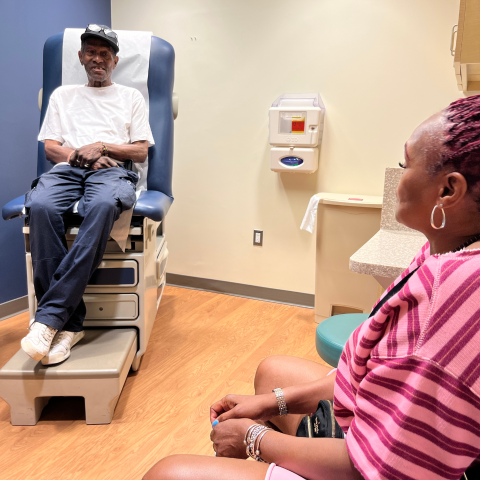
Spend a day with Patient Navigator Kim Taylor and see how hands-on support helps people experiencing homelessness navigate cancer screenings, treatment and a complex health care system. From coordinating referrals to sitting beside clients during appointments, Kim ensures no one faces a cancer diagnosis alone.
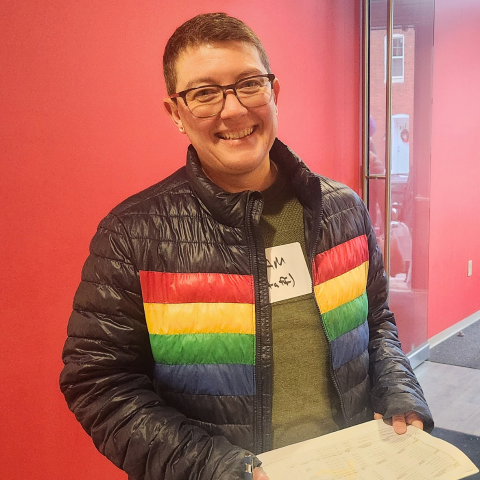
From their headquarters in East Baltimore, Moveable Feast designs and delivers thousands of healthy meals each week for people in Central Maryland and on the Eastern Shore (including some Health Care for the Homeless clients). Read about their approach to improving health through nutrition...

If you drive by the corner of Park, Liberty and Fayette, you'll notice some big changes. See how Sojourner Place at Park, our latest housing project in partnership with Episcopal Housing Corporation, is taking shape!