



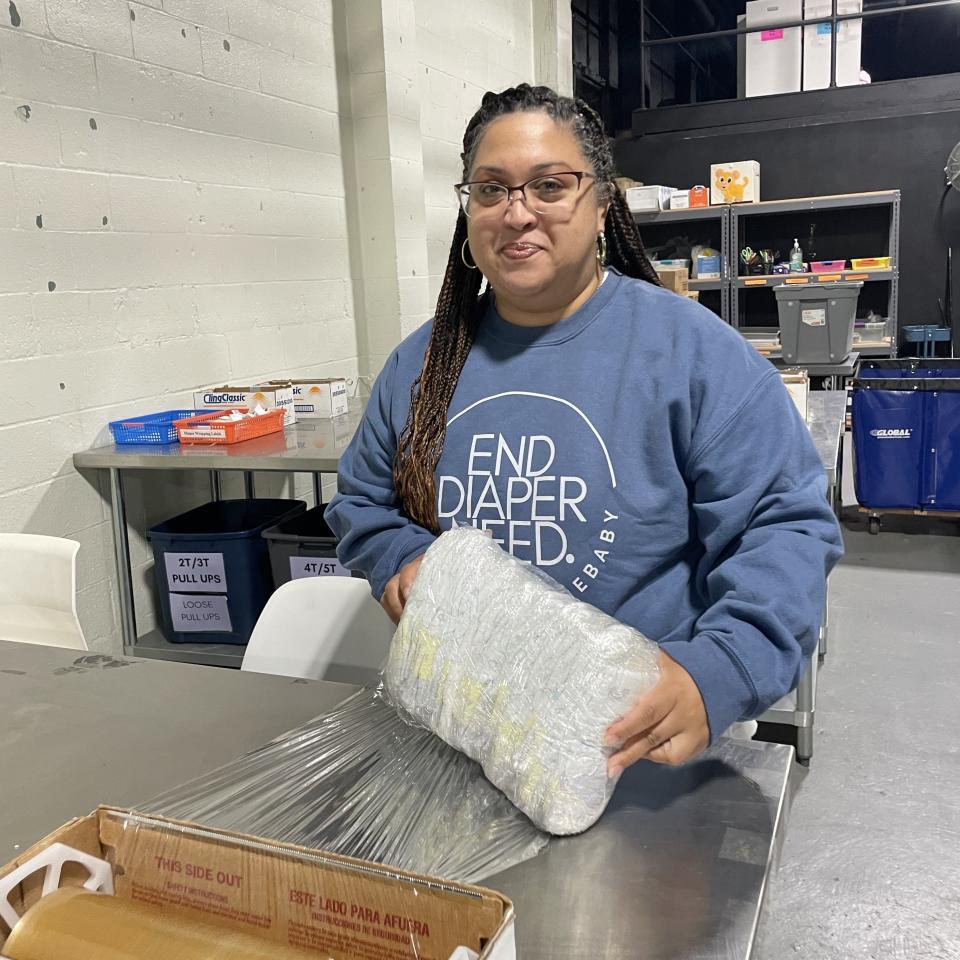
14 million diapers
From its 9,000 square foot warehouse in Baltimore’s Woodberry neighborhood, ShareBaby gets baby essentials – like diapers – into the hands of local families. Health Care for the Homeless kids and parents are among the many beneficiaries. We chatted with Executive Director Nadya Dutchin about ShareBaby’s mission and how rising costs are affecting households with young children.
You refer to ShareBaby as a "mutual aid organization" rather than a "charity." Why?
The idea of “charity” is generally seen as those who are well-resourced giving to the “less fortunate.” We know that we aren’t separate or different from the families who receive the items we distribute. We all want the same things: to be able to provide a home and a life that keeps us safe and helps our families thrive. It’s our collective responsibility to ensure that children have what they need to have a safe, healthy and happy start to life.
How great is the need in Baltimore for supplies to care for young children?
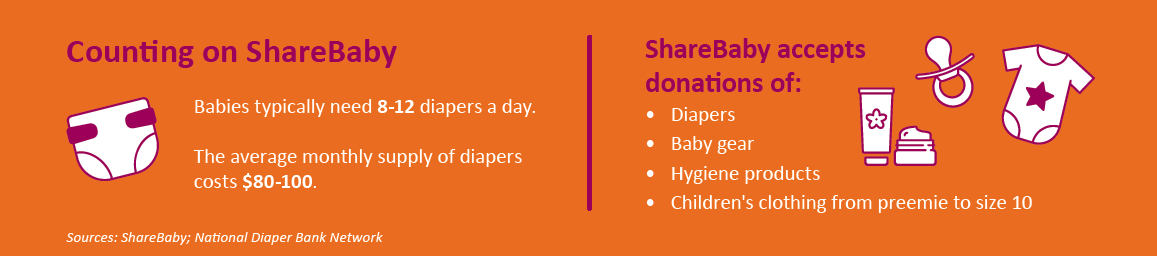
Diaper need is a public health crisis in the United States. One in two U.S. families with young children struggle to afford enough diapers to keep their children clean, dry and healthy. When a family doesn’t have enough diapers to keep their baby clean and dry, the baby is exposed to health risks such as diaper rash, urinary tract infections and stress. The National Diaper Bank Network also finds that families with diaper need report higher rates of anxiety and isolation, as well as barriers to work.
In Baltimore City, the number of children we serve continues to increase each year. In 2014, we served a few hundred children. In 2024, we served 64,445 children.
How do families get the diapers and other supplies ShareBaby collects?
ShareBaby items are distributed by our 70+ partner organizations (like Health Care for the Homeless!). We help our partners meet children’s material needs so families don’t have to make a separate trip.
Over the past decade, what trends have you noticed?
With the rising prices of goods, everyday necessities are becoming out of reach for more families. At the same time, some of our partner organizations are facing funding cuts, causing uncertainty about whether they can continue offering essential support to the families they serve.
Diapers and wipes are always our top requested items. Diapers are expensive and federal nutrition programs like SNAP and WIC do not cover diapers. We’ve seen a consistent need for gear—like strollers and pack and plays. We’ve also seen an increase in requests for clothing, particularly larger sizes.
How can readers support?
- Donate funds. Help raise $150,000 to build a 6-month diaper reserve.
- Share items. Drop off items, send via Amazon Wishlist or host a drive.
- Volunteer. Sign up to quality check, count, sort and bundle baby items. Visit sharebaby.org.
More Recent News
Earlier this year, the Health Resources and Services Administration and the Bureau of Primary Health Care rolled out 2026 Community Health Quality Recognition Badges. Health Care for the Homeless received four badges

We're excited to welcome Kisun Peters as Health Care for the Homeless' new Director of Finance. Kisun brings more than four years of finance leadership experience to this role, along with a commitment to expanding access to health care. Most recently, he served as Director of Finance & Business Development at Tuerk House, a behavioral health nonprofit in Baltimore. Read on to get to know Kisun better (and find out how he spent his summer)!
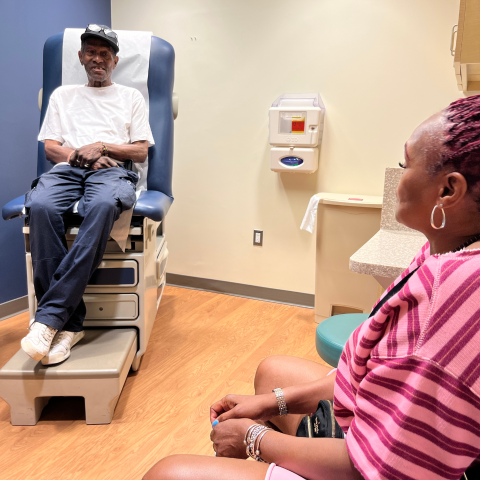
Spend a day with Patient Navigator Kim Taylor and see how hands-on support helps people experiencing homelessness navigate cancer screenings, treatment and a complex health care system. From coordinating referrals to sitting beside clients during appointments, Kim ensures no one faces a cancer diagnosis alone.
From their headquarters in East Baltimore, Moveable Feast designs and delivers thousands of healthy meals each week for people in Central Maryland and on the Eastern Shore (including some Health Care for the Homeless clients). Read about their approach to improving health through nutrition...