


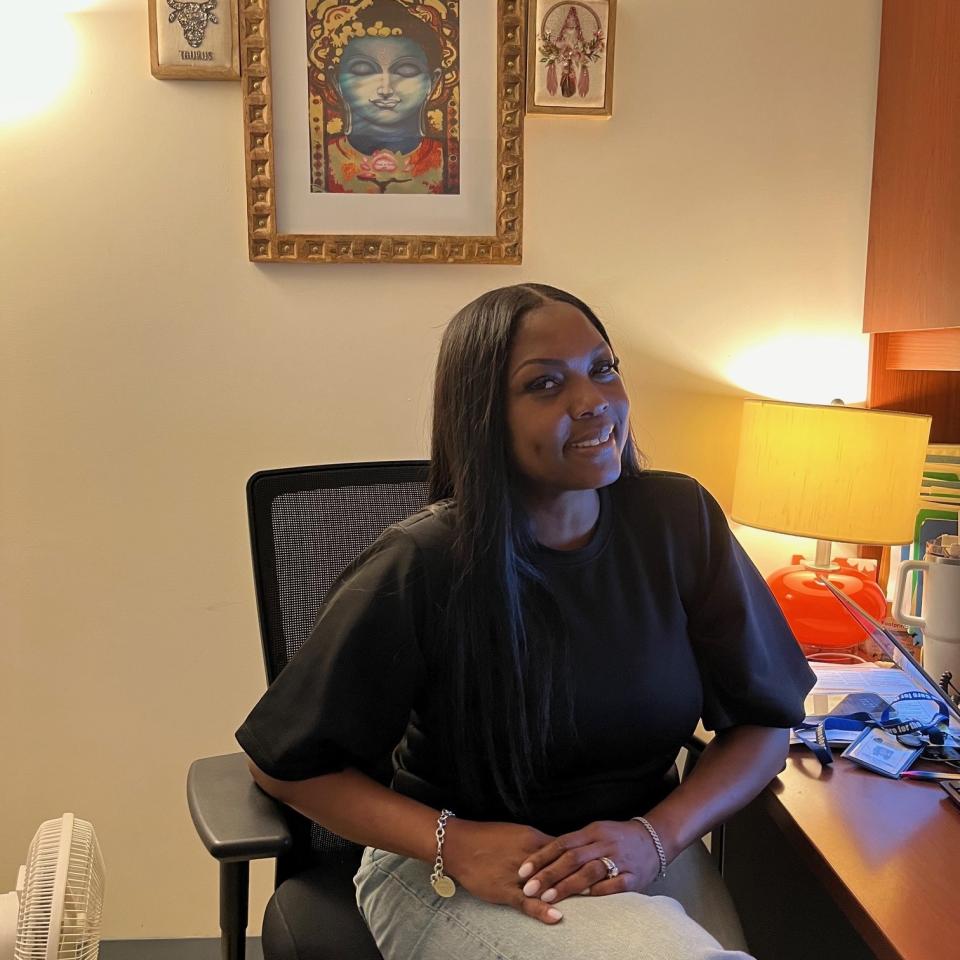
Day in the Life: Case Management
More than a quarter of all client visits to Health Care for the Homeless are with case managers. Presented below is one day in the life of Case Management Coordinator Adrienne Burgess-Bromley, who has been with the agency for 16 years.
9:00AM
It’s a Wednesday, and Adrienne settles into her office on the second floor of the Fallsway Clinic. She takes a look at her schedule to see which clients have already checked in for their appointments and walks the short distance to the waiting area to greet the first client.
“Hi, I’m Adrienne. You can have a seat here.” New to Health Care for the Homeless, the woman in her forties gets right to it. She has a few questions about her new housing voucher and needs support getting food stamps reinstated.
“We have a worker from the Department of Social Services here on Tuesday,” Adrienne offers. “If you leave me your letter, she can help with your benefits.” Next, they talk housing. Adrienne confirms that it’s okay to be in a treatment center in Baltimore City while having a Baltimore County housing voucher.
“I found a place, and it’s being inspected,” the woman explains. “This is my first time with a voucher, so I’m not sure how everything works.”
“It's not fast! But it’s good you have a place to be while you're waiting,” Adrienne says, and hands over a list of organizations that offer support with security deposits. “Once you get housed, we’ll discuss resources for furniture. We have a home starter kit for small items, with a budget of about $200.”
Adrienne schedules her to come back in two weeks and asks if she needs any other services. “They said you have mental health and medication management?” “Yes, we can get you connected with both.” They walk out together to the front desk, where our Client Service
Representatives will check for any available walk-ins today.
9:20AM
Back at her desk, Adrienne looks at the schedule again. “Let's see if we have anyone who needs an intake.” She can see another case manager is talking to a 16-year-old on the list.
They talk through team meeting schedules and opportunities for Sam to learn more.
9:40AM
With a few minutes available before her 10 am, Adrienne grabs a cup of coffee, answers questions from a colleague with a walk-in client interested in drug treatment and tries to complete a new intake via telehealth. The client is already on the line with Disability and asks to call back.
10:00AM
Adrienne pivots to welcome her next in-person appointment. “How are you doing?” “Hi. I'm trying to get some housing. And do you help people with jobs?” he asks.
She gets more background about how long the 62-year-old has been without stable housing and where he is staying now. “I'm trying to find independent housing, no more rooms or basements,” he says. “Right now, the place I'm in has a lot of drug activity. It's pretty bad.”
Adrienne asks if he’s interested in senior housing. “Yes, at my intake, I got a list of some options. I want to be
in Woodlawn. I go to church in that area,” he says. She turns her attention to an online search for senior housing
in Woodlawn. She tries the number at one apartment building, but it goes to voicemail. When asked whether he
has made any calls himself, he says, “No, nothing yet.”
“You will have to do some of the leg work and at least call,” Adrienne advises. “We have to work together, even if you get the application then we can fill it out together.” They spend the next 15 minutes filling out an online
application. “You’ll have to bring your fiancé with you next time so that she can sign off, too,” Adrienne says. “I'm
going to schedule you to come back to see me next week so we can get this finished as soon as possible.”
11:00AM
Back on the phone, Adrienne says, “Hi. I’m calling for your intake assessment.” She confirms that the woman on the other line is eligible for services here and sends a note to the schedulers about getting a dental appointment. Given the client’s interest in housing support, she also schedules a case management visit. Before hanging up, Adrienne sets her up with a Patient Portal account to access her appointments and health information online.
11:30AM
Adrienne calls in the next client and makes sure it’s okay for Sam to observe the visit. This client is 62 years old and has been in a senior living apartment for 10 months. He is passionate about upgrading from a studio to
a one-bedroom. They talk through his options and broader complaints for how he has been treated since moving in.
Adrienne writes a letter for the landlord, supporting his request for a larger space. She also shares information
about Homeless Persons’ Representation Project for legal support if he wants to pursue that.
12:00PM
The colleague Adrienne helped earlier in the day, Justine, checks back in. She was able to find a treatment center with availability, and she’s arranged transportation for the client to get there today. They further strategize about how Health Care for the Homeless can be of support.
12:30PM
Adrienne sees another telephone intake assessment on the schedule and makes the call. She reaches a veteran living in the DC area who is staying in his car. He works, and his schedule prevents him from getting
a bed in the shelters. Generally, it’s difficult to navigate housing for someone who isn't physically in Baltimore. That said, she shares a few resources over the phone and will send them to his email, too. She registers him as an eligible client. “He’s interested in case management, and most of those visits will be telehealth,” she explains.
1:30PM
After a brief lunch break, Adrienne tries calling the client from the morning. She picks up. “Hi. I'm on a bus.
But I need help and don’t want to miss this call.” The woman shares several recent family losses, including
that her mom passed aways just days ago. “I took care of her for the last two and a half years. I don't want the
people who own the house to make me leave before I get things sorted out. I need all the help I can get right now.”
“You have a lot going on,” Adrienne agrees. “Sounds like it would be better to meet in person. Are you able to come to Health Care for the Homeless?”
“Absolutely.”
Adrienne schedules her for a case management appointment, and they hang up. “Sounds like she has a lot
of trauma. I'm hoping to connect her to mental health to help her process what's happened and help her with some type of housing,” Adrienne reflects.
2:05PM
With morning appointments behind her, Adrienne uses the next few hours for administrative and follow-up tasks. Besides finishing up notes, she does initial research online for a larger chest harness for a client with autism and looks up the status of a cataract referral. “There’s normally a lot of requests for emergency shelter placement,” Adrienne says of the day. “Typically that's the bulk of the walk-ins, but it's been quiet in that regard today.”
4:00PM
Sam checks back in for additional supervision and they talk through her upcoming schedule. As Adrienne
wraps up, she takes a peek at the appointments that will be waiting for her in the morning.
More Recent News

We're excited to welcome Kisun Peters as Health Care for the Homeless' new Director of Finance. Kisun brings more than four years of finance leadership experience to this role, along with a commitment to expanding access to health care. Most recently, he served as Director of Finance & Business Development at Tuerk House, a behavioral health nonprofit in Baltimore. Read on to get to know Kisun better (and find out how he spent his summer)!
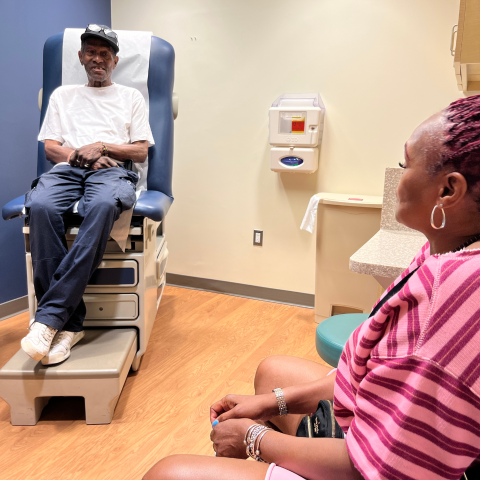
Spend a day with Patient Navigator Kim Taylor and see how hands-on support helps people experiencing homelessness navigate cancer screenings, treatment and a complex health care system. From coordinating referrals to sitting beside clients during appointments, Kim ensures no one faces a cancer diagnosis alone.
From their headquarters in East Baltimore, Moveable Feast designs and delivers thousands of healthy meals each week for people in Central Maryland and on the Eastern Shore (including some Health Care for the Homeless clients). Read about their approach to improving health through nutrition...

If you drive by the corner of Park, Liberty and Fayette, you'll notice some big changes. See how Sojourner Place at Park, our latest housing project in partnership with Episcopal Housing Corporation, is taking shape!