



Day in the life: Housing Services
Spend a “Day in the life” of Therapist Case Manager Deborah Woolford, LMSW, who works with clients in the Assistance in Community Integration Services Program (ACIS). We follow Deborah as she visits clients in their homes, coordinates wrap-around services and arranges trips to our Home Starter Kit store.
8 AM

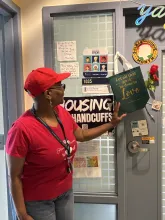
Therapist Case Manager Deborah Woolford, LMSW, is outside her office at 421 Fallsway, filling a bag with groceries and preparing for a jam-packed day of home visits. She wears a red baseball cap and matching red shirt that reads, “ACIS,” with the tagline, “In a loving and kind way.”
Deborah works with Health Care for the Homeless clients who are part of a program called ACIS or Assistance in Community Integration Services. It’s a state Medicaid program that provides supportive services to people experiencing homelessness or at risk of becoming homeless.
On her mind is a client who recently lost a source of income and needs to have her rent adjusted. The client had trouble figuring out what paperwork was needed. That’s the kind of issue Deborah can assist with. “I can make sure she gets to the appointment, fills out the correct forms and knows what to ask for. Peers, case managers, therapist case managers – we can go with you. If you have to sit and wait for two hours, we will sit with you.”
8:30 AM

Deborah drives to East Baltimore to visit Quevon, who lives in a red brick rowhome on a tree-lined street. She hands him some groceries as she enters, including a box of cereal. He’s been living in this home for a year. Quevon is about to head out to his cleaning job, so Deborah takes a quick look around.
Previously, Quevon was sharing a room with strangers at a city shelter. He connected with Health Care for the Homeless through the Mayor’s Office of Homeless Services, and says Deborah helped him get back on track. “Plenty of times, my mental health wasn’t up to par. We’ve grown a bond.”
“He’s been through a lot of life, and we’ve had some hard conversations. What I say, I say it from the heart,” says Deborah.
9 AM
Deborah gets back in her car and heads to Sojourner Place at Argyle, a permanent supportive housing project in West Baltimore. Episcopal Housing Corporation partnered with Health Care for the Homeless to open the building in 2017. Deborah leaves a note for one of her clients.
On average, caseloads range from 22-25 clients, some of whom may have children. Deborah says it’s crucial for social workers to learn their biases and maintain their boundaries. Working with so many people also requires skillful communication. “Sometimes you do a lot of listening. Sometimes you deliver serious news. You have to adapt and be humble.”
Deborah checks her phone. Sharnay, a client, is texting about her appointment with a psychiatrist that afternoon. Deborah is glad to see Sharnay’s message. “Once you get someone into housing, you have to continue to help build them up in all the dimensions of their life.”
Up next: a home visit over by the stadiums.
9:45 AM
Deborah parks in front of an apartment building and calls her client to let him know she’s outside. He has mobility issues that make it difficult to get to his appointments, so Deborah is dropping off his medication. She asks how he is eating and sleeping and promises to be in touch soon.
“ACIS makes sure there are wrap-around services so people don’t run into barriers that could hinder their progress,” Deborah explains as she gets back in the car. “We become our client’s support system.”
Before heading out, Deborah gets another call. A client explains that his home recently passed inspection but then was randomly selected for an additional inspection. He describes the proactive steps he took to make sure the inspection went smoothly.
Another client calls with concerns about her housing. She lives with her adult son, who is disabled, and they are facing potential eviction.
10:30 AM
Back at the downtown clinic, Deborah heads to a large closet on the second floor. It now functions as a “Home Starter Kit store.” Newly housed clients can spend $200-$250 on home essentials, like toiletries and cleaning products. She is shopping for a client who can’t travel to the clinic.
Housing Specialists Jessica Caldwell and Quinn McCarthy give her a tour. “He needs queen-sized sheets,” says Deborah, browsing the cabinets. “I’ll take the ‘bed in a box’ set.”
11:15 AM
Back in the car, Deborah drives to another home in Northeast Baltimore.
This job is personal for her. “I experienced homelessness, and I was able to get into a shelter. That gave me a foundation. I got assistance. I lived in public housing. I know that you need support to navigate the system. At the time, I didn’t have that.” Now, she can offer that support.
Deborah calls her coworker, peer advocate Channel McBride, to update her on the day. They work together to help the same clients. “Sometimes people connect better with a peer, so it’s good to have both,” explains Deborah.
11:30 AM
There’s a tower of boxes in Bailey’s* living room. For their safety, she and her young daughters are moving out of Baltimore City. Bailey is excited; she’s already found a new apartment. The move means Deborah’s time as Bailey’s therapist case manager is ending. “It’s sad and it’s happy,” says Deborah.
They reflect on how far their relationship has come. Deborah says many clients are leery of accepting new people into their lives, and Bailey was hesitant to reach out at first. Bailey lives with anxiety and a panic disorder, and Deborah has been a source of reassurance. “She reminds me to breathe first. Once we do that, we’ll work out next steps,” says Bailey.
Bailey and her daughters have lived in this apartment for two years and previously lived in a shelter. “Housing is a big factor with my mental health, because if we have nothing, we have to have somewhere to lay our heads.”
12:30 PM
Back at the downtown clinic, client Sharnay has arrived for her psychiatry appointment. Deborah grabs her a snack. “Food is my love language. People can’t listen when they are hungry.”
Outside of work, cooking is a way for Deborah to relax. “I bring food every day. It could be spaghetti, meatballs, curried chicken. Making food for others helps ease my mind, be appreciative and stay grounded.”
1:30 PM

Following Sharnay’s appointment, Deborah goes with her to pick out a Home Starter Kit. Jessica keeps track of what Sharnay picks out.
“I’m most excited for the cleaning products!” says Sharnay. She and her teenage son moved into their apartment in April. She loads a cart and tote bags with toilet paper, towels, sponges and more.
“The things we take for granted are what people appreciate most,” says Deborah.
2 PM
Sharnay’s prescription will be filled by Mt. Vernon Pharmacy, next to the clinic. Deborah finds a small room where Sharnay can wait with her bags. Deborah also grabs bus tokens so Sharnay can get to an upcoming social services appointment.
“Deborah helps me get around and get the stuff that I need,” says Sharnay. “She talks to me when I'm feeling down. She’s really a good person.”
3 PM
Deborah makes sure that Sharnay picks up her medication and makes it into her Uber.
Notes from each home visit must be completed within 72 hours, so she gets started on documentation. Then, it’s time to prepare materials for a social work intern who is starting tomorrow.
This work is complex and can feel heavy. What advice does Deborah have about preventing burnout? She grabs a green tote bag that’s hanging on her door. It reads, “Let all that you do be done in love.”
“Without love, it won't happen,” she says. "Without knowing who you are, you're not going to make it through.”
4 PM
Deborah packs her client’s home starter kit items into her car. She’ll swing by his place on the way home.
Reflecting on the day, Deborah emphasizes that housing services and ACIS are a team. “It's a collective effort. Without team spirit, we would not be able to help the number of people we see and provide these services. It takes a village.”
Each day is different. Tomorrow, her goal is to connect with three clients by phone. “But if they need a visit,” Deborah gestures out the window, “I’ll get in my car and go see them.”
*Bailey is a pseudonym.
More Recent News
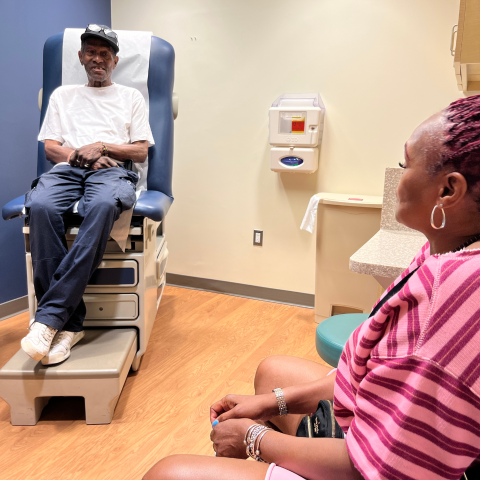
Spend a day with Patient Navigator Kim Taylor and see how hands-on support helps people experiencing homelessness navigate cancer screenings, treatment and a complex health care system. From coordinating referrals to sitting beside clients during appointments, Kim ensures no one faces a cancer diagnosis alone.
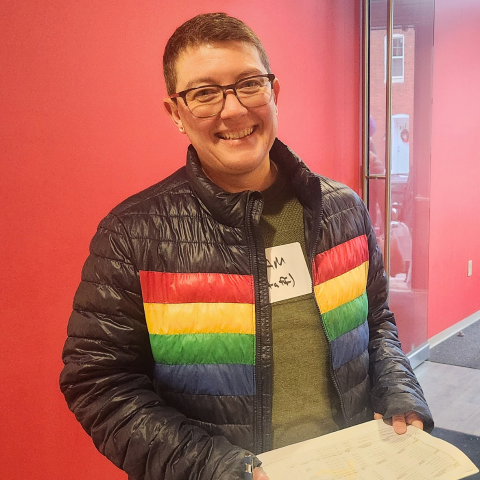
From their headquarters in East Baltimore, Moveable Feast designs and delivers thousands of healthy meals each week for people in Central Maryland and on the Eastern Shore (including some Health Care for the Homeless clients). Read about their approach to improving health through nutrition...

If you drive by the corner of Park, Liberty and Fayette, you'll notice some big changes. See how Sojourner Place at Park, our latest housing project in partnership with Episcopal Housing Corporation, is taking shape!

Jocelyn Portillo may be a “Jersey girl” at heart, but she’s built a life of service in Baltimore. Read how she’s turning her passion for helping others into a career.