


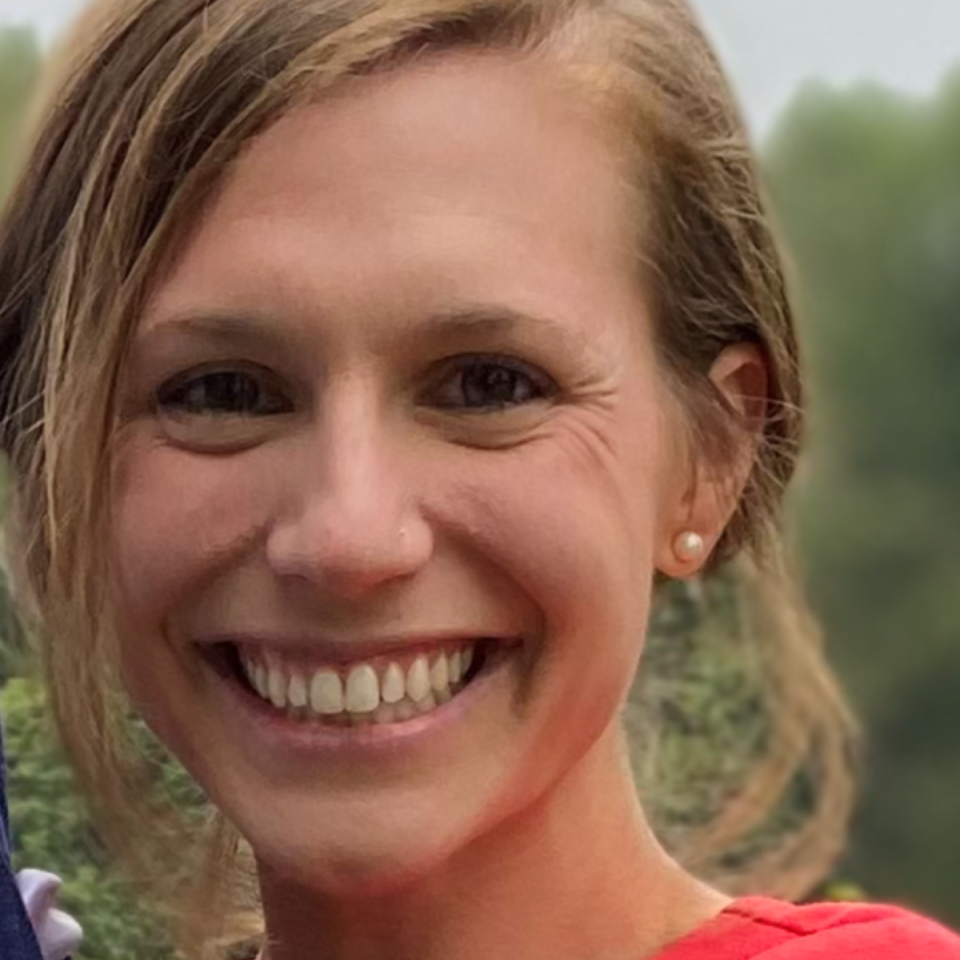
Meet our Director of Quality Improvement
Q&A with Lisa Hoffmann, RN, MPH
With four and a half years at Health Care for the Homeless, Lisa Hoffmann first started as our Compliance Coordinator in January of 2020. Weeks later, she became invaluable in helping the organization rise to meet the incredible safety and compliance demands that came during a global pandemic. Building on her nursing and public health degrees as well as experiences in the Peace Corps, the World Health Organization and the Center for Medicare and Medicaid Innovation, Lisa brings a strong sense of teamwork to all areas of her job. Get to know more about Lisa, her team and the role of Quality at Health Care for the Homeless in the Q&A below.
what drew you to a career in quality and compliance?
My favorite clinical rotation in nursing school was the community-based health rotation. Spending time in the community – meeting people in their homes, conducting an environmental assessment of a neighborhood in Chicago (where I went to school) and learning public health theory molded my perspective and career trajectory. Being able to support people in staying healthy in their everyday lives is where I wanted to be!
After I graduated, I spent time as a public health volunteer in the Peace Corps and worked for the Center for Medicare and Medicaid Innovation, where I participated in an Institute for Health Care Improvement (IHI) Fellowship that focused on quality improvement science. I really stumbled upon quality in this way. I then spent time working domestically and abroad and continued to grow in my knowledge of quality and safety work.
The more I learned, the more I understood and appreciated that quality and compliance work are extremely collaborative — lots of facilitation, listening, and learning from everyone around you. Done well, the work is inclusive of everyone and that’s what I love most about it — how it sees everyone’s individual contributions and helps build a collective, sustainable system. It combines data, policy, and interpersonal connection in such a beautiful way!
How have the priorities of safety and compliance changed over the last four years?
Things have certainly shifted. I was working here only a few short months before COVID turned the world upside down. The focus during that first year or two was an all-hands-on-deck approach and the most PDSA cycles I had ever seen in one setting and in the shortest amount of time. It was incredible to watch staff step up in a very trying time and build systems overnight and iterate until something worked. The passion, dedication, and collaboration I saw was inspiring and there were so many valuable lessons learned: 1) direct lessons in emergency preparedness and infection control, which we continue to work on as CDC guidance and data evolve and 2) indirect learning in how we design and implement PDSA cycles at every level and department.
Four years out, we are able to focus our attention back to everyday operations and spend time refining our systems to ensure safety in all spaces – a more distributed focus on all components of safety and wellness.
In your role as Director of Quality Improvement, you oversee both Performance Improvement and Compliance work. What are some of the big goals for those departments in 2024?
We are excited to have completed both the HRSA onsite visit and The Joint Commission survey this year – yay! These were the greatest focus areas this year for Compliance. So much exceptional work was done by everyone to prepare and shine during these visits. We will continue supporting departmental projects in improving and maintaining safe systems across sites. This includes, but is not limited to sterilization, workplace violence and staff wellness, and client confidentiality. We will also continue to work on our Risk Management goals for 2024, which include work on referral processing, credentialing and privileging, and OB training and written policies and procedures.
For Performance Improvement, we will continue to collaborate with the engaged and thoughtful subcommittees on each of the ten PI measures we’ve chosen as an Agency. We are also continuing to expand our work in the health equity space, focused on addressing disparities we’ve seen in several measures, including hypertension and diabetes. We’ve tried several new approaches in PI work this year, including client partnership in a subcommittee, which have been successful so we are excited to keep going!
Our team of Senior Director of Quality Margaret Flanagan, Compliance and Quality Specialist Tara Dorsey (Compliance), and Quality Improvement Specialist Marie Stelmack (Performance Improvement) + the many amazing staff across all departments have contributed to the success of quality and safety work. So I want to make sure to give a shout out here!
How have you shifted Quality work to further the agency’s goal of becoming an anti-racist organization?
In both the Compliance and PI Departments, there is some great work to further our commitment to racial equity and inclusion. In the Compliance space, we are improving our policy and procedure review process by requiring staff to complete several questions that encourage thoughtful consideration before finalizing. We are also partnering with Senior Client Relations Manager Malcolm Williams to build a client review panel of selected policies and procedures. And we’ve worked with REI Health Specialist Arie Hayre-Somuah to pilot a new health literacy tool.
On the PI side, we’ve identified and been doing targeted work on three measures that have the greatest racial and ethnic disparities in our client population: hypertension, diabetes, and depression remission. As part of our standard of practice in subcommittees, we are integrating client voice via interviews, groups, or participation in a subcommittee. We also use data to help inform our understanding of disparities and create more targeted interventions. This includes working with the Medical Team to review care team data via a scorecard and develop individual change interventions to address what is playing out in the data for their panel.
What do you want staff to know about the work of Quality?
As James Moses, a CQO at a health care organization said “quality improvement is a team sport”. Systems level thinking takes a strong multidisciplinary approach (includes staff across all departments and clients). We are so lucky to have wraparound services to help provide the best care for clients, and with all of these brilliant minds, we have the greatest opportunity to come together, solve big problems, and make sustainable systems to carry on. We do this not only with the use of expertise, but also with data. Combining perspective and data help guide us to the most effective means of solving a problem.
What are your favorite parts of the job?
The mission-driven people that work at Health Care for the Homeless, particularly, seeing people light up when they talk about their work. Learning from coworkers and clients and watching those around me do the same. Problem solving with a team. A well-documented process.
What helps you find balance or joy outside of work?
I love hiking and being outdoors, traveling, crafting, eating great food, exploring Baltimore and all the fun things to do here!
More Recent News

We're excited to welcome Kisun Peters as Health Care for the Homeless' new Director of Finance. Kisun brings more than four years of finance leadership experience to this role, along with a commitment to expanding access to health care. Most recently, he served as Director of Finance & Business Development at Tuerk House, a behavioral health nonprofit in Baltimore. Read on to get to know Kisun better (and find out how he spent his summer)!
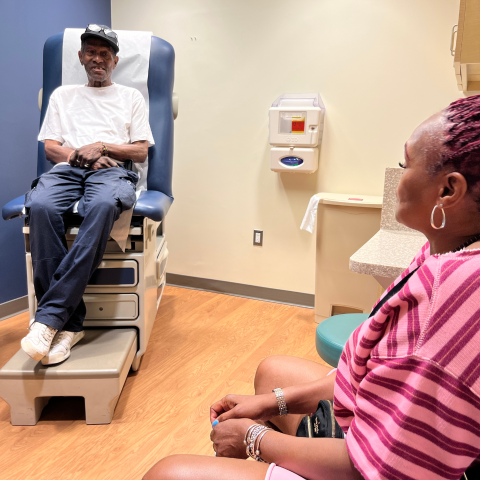
Spend a day with Patient Navigator Kim Taylor and see how hands-on support helps people experiencing homelessness navigate cancer screenings, treatment and a complex health care system. From coordinating referrals to sitting beside clients during appointments, Kim ensures no one faces a cancer diagnosis alone.
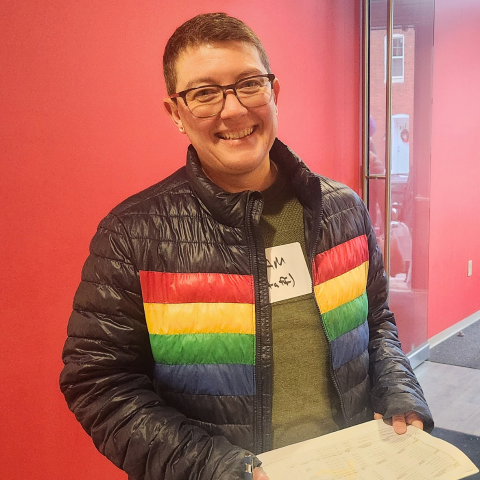
From their headquarters in East Baltimore, Moveable Feast designs and delivers thousands of healthy meals each week for people in Central Maryland and on the Eastern Shore (including some Health Care for the Homeless clients). Read about their approach to improving health through nutrition...

If you drive by the corner of Park, Liberty and Fayette, you'll notice some big changes. See how Sojourner Place at Park, our latest housing project in partnership with Episcopal Housing Corporation, is taking shape!