


Native American Heritage Month 2022
Throughout November, we're reflecting on the rich history, struggles, and triumphs of the first peoples of this land and in the wider Americas before European colonization.
As we spread awareness about the perspectives and challenges faced by Native Americans in the past and today, we pay respect to the rich cultures, traditions, and contributions that continue to guide us. Below are a few ways you can commemorate Native American Heritage Month this year:
Whose land are we on?
Baltimore City is the ancestral home to the Paskestikweya (Pist-ka-tanh-wah) people, translated into English as Piscataway. Health Care for the Homeless buildings and clinics stand at the tip of a vast coastal area that sustained indigenous peoples until the arrival of Europeans in the 1600s. The Piscataway peoples were decimated, absorbed by larger tribes and eventually forced to move west.This land was shared in common with the Susquehannock Tribe. The tribe suffered genocide at the hands of colonists. Known descendants are among the Iroquois and Lenape Tribes today.
In the last year, our agency became an affordable housing developer. As we think about our role in owning and changing land and property, it's vital to understand the history of the land and how the people who lived on it shape the present day. At the 2021 groundbreaking of Sojourner Place at Oliver, Kevin Lindamood offered a land acknowledgement to recognize a history that has been deliberately erased and to move forward, informed by that history, toward a more just future.
"We acknowledge past and present citizens of the Cedarville Band of the Piscataway Conoy, the Piscataway Indian Nation, Piscataway Conoy Tribe, Susquehannock Tribe, and the many members of the Lumbee Tribe of North Carolina who have and continue to make Baltimore their home. We acknowledge that we stand on stolen land."
The Fight for Civil Rights
The history of Native American Heritage Month is the story of the struggle for civil rights and self-determination for Native Americans in the United States. Long before the first colonists arrived, indigenous tribes stewarded the land. Native Americans were forcibly removed from their tribal lands and saw their traditions and heritage degraded and destroyed:
- Not legal U.S. citizens until 1924, first Americans continued to suffer the effects of segregation and discrimination imposed by the U.S. government and the larger White society.
- In the 1960s, inspired by the African American civil rights movement, Native American activists formed the Pan-Indian and The Red Power movements, including American Indian Movement (AIM) and National Indian Youth Council (NIYC).
- National Native American Heritage Month was signed into law in 1990, but a July 2003 U.S. Commission on Civil Rights noted, "...many [of] the government's promises to Native Americans go largely unfulfilled." As of 2022, there are 574 federally recognized Tribes in the United States, though many are still advocating for recognition.
Celebrating Native American Civil Rights Leaders
Indigenous activists worked to expose the legacy of violence and hypocrisy that guided western expansion and secure "a permanent home on their own native soil." Read more about civil rights leaders below.
- Sarah Winnemucca
- Chief Standing Bear
- Madonna Thunder Hawk
- Hilaria Supa Huamán
- Dennis Banks
- Tom Goldtooth
- Alvin Warren
Identity and History Impacts Health
Due to a violent history of colonization, genocide, displacement, and oppression, today Native Americans have amongst the lowest health status of all Americans.
- Since 2014, Cancer has been the leading cause of death for Native Americans, followed by heart disease.
- Native communities also experience lower life expectancies, lower quality of life, and disproportionate prevalence of chronic illnesses like diabetes
These disparities in health are perpetuated by the social determinants created and maintained by racism such as: lack of access to health care, poverty, lack of insurance coverage, discrimination, lower educational attainment, language and communication barriers, lack of diversity in healthcare workforce.
Federal health programs geared toward serving indigenous communities, like the Indian Health Service, have endeavored to make healthcare more accessible to the 574 federally recognized tribes in the U.S. today. However, an estimated 200 tribes are not federally recognized, which means that they do not have access to these federal funding streams or health care resources.
Informational Resources:
- Resources Library for Native American Health | Johns Hopkins
- Decolonizing Mental Health: Transforming Care for BIPOC Communities | World Channel
- Indigenous Communities and Mental Health | NAMI
Native American Health Disparities:
- Native American Disparity Fact Sheet| Indian Health Service
- Profile of American Indians and Alaska Natives | Office of Minority Health
Community Resources:
- Native American Lifelines: Health Care Resources for Native Americans in Baltimore, MD
- Johns Hopkins Family Spirit Home Visiting Program for Native Maternal and Child Health
National Day of Mourning
Thanksgiving centers on a one-sided understanding of ongoing American colonization that ignores the persistent trauma encompassed by this federal holiday. The National Day of Mourning was developed as a day of remembrance and protest to disrupt this narrative. The following plaque at Cole's Hill, which overlooks Plymouth Rock, offers a poignant reflection on the disregarded realities of Indigenous peoples during colonial expansion:
Learn more about The National Day of Mourning by exploring the following resources:
- Disrupting Public Memory: The Story of the National Day of Mourning | Facing History and Ourselves
- National Day of Mourning — November 24, 2022 | National Today
- National Day of Mourning turns Thanksgiving into something more honest | CNN
Explore Native American Heritage Events and Webinars
Support Indigenous-led efforts in your area
(Credit to Equity in the Center for the first three suggestions below)
- Sign Piscataway Conoy Tribe petitions on change.org
- Support the Piscataway Conoy Tribe's push for federal recognition by contacting Senator Chris Van Hollen, Senator Ben Cardin, Congressman Steny Hoyer, Congressman Anthony Brown, and Congressman Jamie Raskin.
- Donate to Through Piscataway Eyes, the 501c3 whose programs and land trust (which accepts donations of land) benefit members of the Piscataway Conoy Tribe.
Follow these organizations in Baltimore:
Baltimore American Indian Center
Maryland Commission on Indian Affairs
Native American Lifelines
Johns Hopkins Center for Indigenous Health
More Recent News
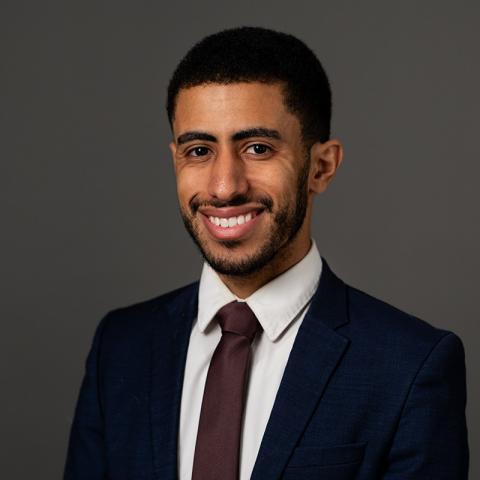
We're excited to welcome Kisun Peters as Health Care for the Homeless' new Director of Finance. Kisun brings more than four years of finance leadership experience to this role, along with a commitment to expanding access to health care. Most recently, he served as Director of Finance & Business Development at Tuerk House, a behavioral health nonprofit in Baltimore. Read on to get to know Kisun better (and find out how he spent his summer)!
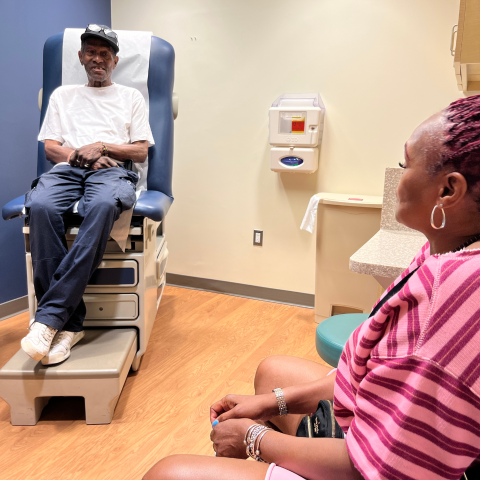
Spend a day with Patient Navigator Kim Taylor and see how hands-on support helps people experiencing homelessness navigate cancer screenings, treatment and a complex health care system. From coordinating referrals to sitting beside clients during appointments, Kim ensures no one faces a cancer diagnosis alone.
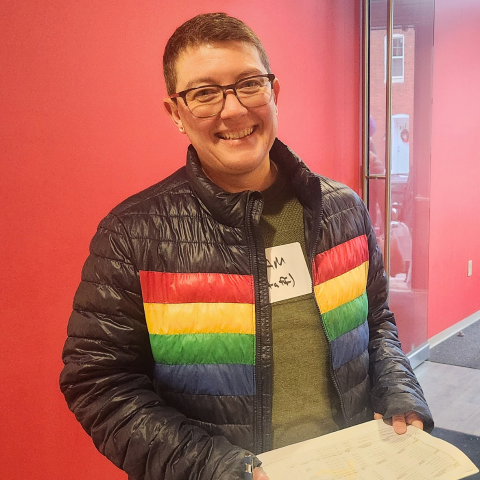
From their headquarters in East Baltimore, Moveable Feast designs and delivers thousands of healthy meals each week for people in Central Maryland and on the Eastern Shore (including some Health Care for the Homeless clients). Read about their approach to improving health through nutrition...

If you drive by the corner of Park, Liberty and Fayette, you'll notice some big changes. See how Sojourner Place at Park, our latest housing project in partnership with Episcopal Housing Corporation, is taking shape!