



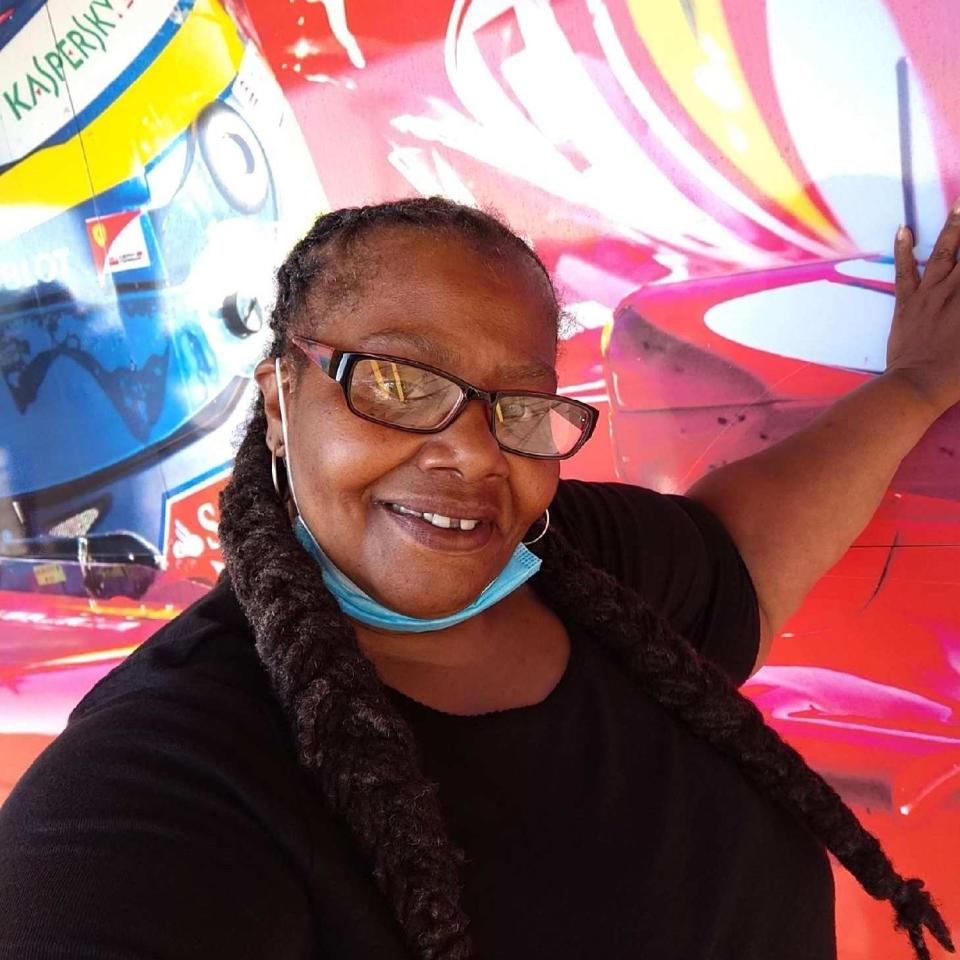
"I don't have a house, but I'm home."
Through the isolation of COVID-19, family has been more important than ever for most of us. For sister, mother, grandmother and Uber driver, Tagerin Jackson, strong family connections have always been her lifeline.
This is true for most clients despite systems that work to keep them isolated and vulnerable:
- Our criminal justice system separates people from their families, communities and society.
- Shelter systems are designed for single men or women and children, but not families or men with children.
- People who are lucky enough to get a housing voucher risk losing it if friends without housing stay with them.
- Entire families, disproportionally families of color, are torn apart by the foster care system.
Sadly, efforts to address these realities head on are limited. But according to Director of Public Policy Joanna Diamond, “Several reform issues, many of which we work on, keep families together indirectly. These include decriminalization, alternatives to incarceration and moving from the congregate shelter model to prioritize permanent, supportive housing.”
Despite the barriers, on most days, you can see clients like Tagerin in our lobby with a friend or family member there to cheer them on.
 Tagerin’s support system helped her seek treatment and encouraged her to prioritize her physical, mental and emotional health. “Even through being locked up and my addiction, my family has always been there. I’m the youngest and they still spoil me,” she says. As a mother and grandmother, she does the same.
Mass incarceration has separated her from her son Frank and Frank from his own sons, but Tagerin makes sure they talk every day. She takes one of her grandsons along with her while she works so they can spend extra time together. “I am so, so at peace and really loving life,” says Tagerin with a smile.
Encouraged by family and community and rooted in her faith, this summer marked two years of sobriety for Tagerin. Her sponsor of nine years, her sister who has been sober for 26 years, and her Narcotics Anonymous support group were there to celebrate alongside her.
She currently lives with her brother, explaining, “I don’t have my own house, but I’m home. He doesn’t want me to leave.” Now that she’s fully vaccinated (thanks to a little encouragement from her older sister), she’s visited Frank in prison and can’t wait to have even more gatherings with her family here in Baltimore.
Read more about the impact of incarceration on homelessness.
More Recent News

We're excited to welcome Kisun Peters as Health Care for the Homeless' new Director of Finance. Kisun brings more than four years of finance leadership experience to this role, along with a commitment to expanding access to health care. Most recently, he served as Director of Finance & Business Development at Tuerk House, a behavioral health nonprofit in Baltimore. Read on to get to know Kisun better (and find out how he spent his summer)!
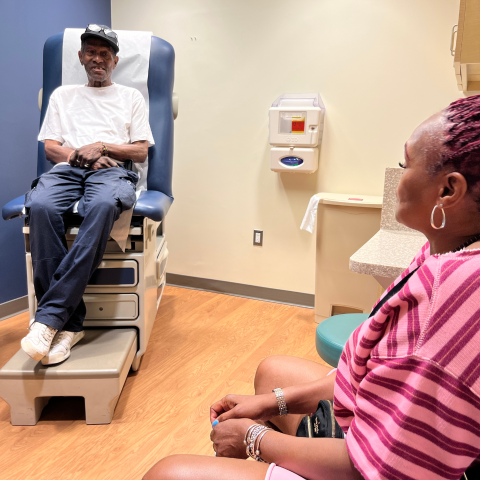
Spend a day with Patient Navigator Kim Taylor and see how hands-on support helps people experiencing homelessness navigate cancer screenings, treatment and a complex health care system. From coordinating referrals to sitting beside clients during appointments, Kim ensures no one faces a cancer diagnosis alone.
From their headquarters in East Baltimore, Moveable Feast designs and delivers thousands of healthy meals each week for people in Central Maryland and on the Eastern Shore (including some Health Care for the Homeless clients). Read about their approach to improving health through nutrition...

If you drive by the corner of Park, Liberty and Fayette, you'll notice some big changes. See how Sojourner Place at Park, our latest housing project in partnership with Episcopal Housing Corporation, is taking shape!